Volleyball may not command the same national spotlight in India as cricket, football or badminton, but it has produced generations of outstanding athletes and some memorable international moments. The sport has especially deep roots in Kerala, Tamil Nadu and Punjab, where school, departmental and local tournaments have built strong playing cultures. India’s men also have a proud Asian Games history: bronze in 1958, silver in 1962 and bronze again in 1986. That 1986 side, featuring Jimmy George, Cyril Valloor, G. E. Sridharan and K. Udayakumar, remains one of the most celebrated teams in Indian volleyball.
The modern game has gained fresh visibility through professional league volleyball, televised matches and renewed Asian competition. In 2026, experienced players such as Jerome Vinith, Ashwal Rai and Muthusamy Appavu were still representing India in major continental events.
1. Jimmy George
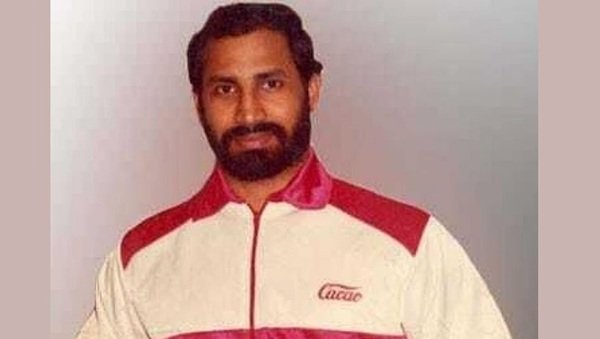
Jimmy George remains the defining name in Indian volleyball. The Kerala attacker combined extraordinary jumping, timing and power with the ambition to compete abroad. He became one of the earliest Indian volleyball players to build a professional career overseas, including in Italy, and represented India at the 1974, 1978 and 1986 Asian Games. He was a central figure in the bronze-medal campaign at Seoul 1986. His death in a road accident in 1987, at only 32, ended a remarkable career, but his reputation has endured.
Key highlights:
- Arjuna Award recipient in 1976.
- Played professional club volleyball in Italy.
- Member of India’s 1986 Asian Games bronze-medal team.
- Famous for explosive jumping and powerful attacking.
2. Tom Joseph
Tom Joseph became one of India’s best-known volleyball players of the 2000s. The Kerala attacker was admired for his reach, hard spiking and ability to handle a major scoring role. He represented India at two Asian Games and four Asian Volleyball Championships and also captained the national side. After retirement, he moved into coaching and remained connected with elite volleyball. The Government of India recognised his long contribution with the Arjuna Award in 2014.
Key highlights:
- Former captain of the Indian national team.
- Represented India at multiple Asian tournaments.
- Arjuna Award winner in 2014.
- Later moved into coaching.
3. G. E. Sridharan
- E. Sridharan is important to Indian volleyball both as a player and coach. He was part of the celebrated 1986 Asian Games bronze-medal squad and also gained club experience abroad. After his playing career, he became a respected coach and helped develop later generations. His contribution was recognised with the Arjuna Award in 1982 and the Dronacharya Award in 2007.
Key highlights:
- Member of India’s 1986 Asian Games bronze-medal team.
- Arjuna Award recipient in 1982.
- Dronacharya Award recipient in 2007.
- Influential as both player and coach.
4. Cyril C. Valloor
Cyril C. Valloor holds a special place in Indian volleyball history because he captained the national team to bronze at the 1986 Seoul Asian Games. Playing alongside Jimmy George and other major names, Valloor provided leadership to one of India’s strongest teams. He became a symbol of the country’s 1980s volleyball generation and remains closely associated with India’s most recent Asian Games medal in the sport.
Key highlights:
- Captain of India’s 1986 Asian Games bronze-medal team.
- Arjuna Award recipient.
- Major figure in India’s 1980s golden generation.
- Remembered for leadership at continental level.
5. K. C. Elamma
- C. Elamma is one of the pioneers of Indian women’s volleyball. Known as a powerful spiker and intelligent all-round player, she helped Kerala win important national titles and represented India internationally during the 1970s. In 1975, she became the first woman from Kerala to receive the Arjuna Award. Her career remains significant because she achieved national recognition long before women’s volleyball received modern media coverage.
Key highlights:
- First woman from Kerala to win the Arjuna Award.
- Represented India internationally.
- Helped Kerala succeed in national championships.
- Pioneer for women in Indian volleyball.
6. K. Udayakumar
- Udayakumar was one of the most versatile players from India’s celebrated 1980s generation. Strong in both attack and defence, he was part of the team that won bronze at the 1986 Asian Games. He later captained India and remained closely connected with the sport after retirement. His balanced game made him an important part of a team filled with outstanding attackers.
Key highlights:
- Member of the 1986 Asian Games bronze-medal squad.
- Former India captain.
- Arjuna Award recipient in 1991.
- Admired for all-round ability.
7. Jerome Vinith Charles
Jerome Vinith Charles is one of the most recognisable Indian attackers of the professional-league era. The 1.98-metre opposite has represented India for years and has also captained the national side. Powerful hitting from the right side is his biggest weapon. Jerome remained relevant in 2026, representing India in the AVC Men’s Cup and AVC Men’s Volleyball Continental competition.
Key highlights:
- Long-serving India international and former captain.
- Opposite spiker known for heavy attacking.
- Men’s MVP when India won South Asian Games gold in 2019.
- Continued representing India in 2026.
8. Ashwal Rai
Ashwal Rai is one of India’s leading modern middle blockers. At more than two metres tall, he provides reach, quick attacks and strong blocking at the net. He was part of the Indian team that impressed at the Hangzhou Asian Games, where India defeated South Korea and Chinese Taipei before finishing sixth. Ashwal has also become a familiar face in professional league volleyball and remained involved in India’s 2026 continental campaigns.
Key highlights:
- Specialist middle blocker.
- Key player during India’s 2023 Asian Games run.
- Prominent professional-league performer.
- Represented India in 2026 AVC competition.
9. Muthusamy Appavu
Muthusamy Appavu plays the setter position, often described as the tactical hub of a volleyball team. His job is to control tempo, distribute the ball and create the best possible attacking opportunities. Appavu was part of India’s sixth-place Asian Games campaign and continued in the national setup in 2026. His importance comes from decision-making, coordination and the ability to run an offence under pressure.
Key highlights:
- India international setter.
- Member of the Hangzhou Asian Games squad.
- Played for India in 2026 Asian competitions.
- Known for organising attacks and controlling tempo.
10. Vinit Kumar
Vinit Kumar is an experienced opposite hitter who captained India during the Hangzhou Asian Games campaign. India produced one of its strongest recent tournament runs there, defeating South Korea and Chinese Taipei before finishing sixth. Vinit combined leadership with attacking responsibility and has also been a familiar player in India’s professional volleyball circuit.
Key highlights:
- Captained India at the Hangzhou Asian Games.
- Helped India reach sixth place.
- Experienced opposite hitter.
- Well known through national-team and professional-league volleyball.
Conclusion
Indian volleyball’s most famous names come from different eras. Jimmy George gave the sport an international icon, while Valloor, Sridharan and Udayakumar helped define the historic 1986 team. K. C. Elamma broke barriers for women, and Tom Joseph carried Indian volleyball into a later generation.
In 2026, Jerome Vinith, Ashwal Rai and Muthusamy Appavu continue that tradition in a new environment shaped by professional leagues and wider media exposure. India still has work to do to return to the top tier of Asian volleyball, but these players show the depth, skill and history behind a sport that continues to matter deeply in many parts of the country.