The sitar holds a special place in Hindustani classical music. Its curved frets, melody strings, chikari strings and resonating taraf strings produce a sound that can move from a meditative alap to an electrifying jhala. The instrument developed in North India through a long interaction between Indian string traditions and Persian influences, then travelled from royal courts and mehfils to radio, recordings, international festivals and the world’s major concert halls.
The greatest sitarists did more than perform ragas beautifully. They reshaped technique, tone, instrument design and even the global image of Indian classical music. Some deepened Gayaki Ang, making the sitar sing like the human voice. Others strengthened Tantrakari Ang, layakari, taankari or new electronic possibilities. This 2026 edition looks at ten masters whose artistry and innovation continue to define the sitar.
1. Pandit Ravi Shankar
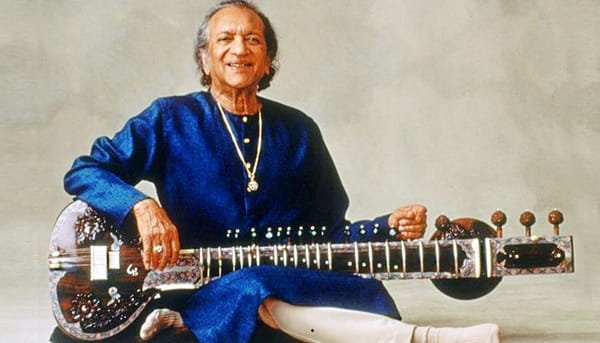
Pandit Ravi Shankar remains the most internationally recognised sitarist in Indian music history. Trained under Ustad Allauddin Khan of the Maihar gharana, he developed a concert style combining expansive raga architecture, rhythmic imagination and brilliant jor-jhala passages. His collaborations with Yehudi Menuhin and association with George Harrison introduced vast new audiences to Hindustani music.
Shankar received the Bharat Ratna in 1999 and won four Grammy Awards. The Recording Academy also honoured him posthumously with a Lifetime Achievement Award. His larger achievement was making the sitar a respected global concert instrument without abandoning the discipline of raga and tala.
2. Ustad Vilayat Khan
Ustad Vilayat Khan was the towering modern exponent of the Imdadkhani, or Etawah, gharana. His greatest contribution was the refinement of Gayaki Ang, using long meends, microtonal ornamentation and vocal-style phrasing to make the sitar closely resemble khayal singing.
He also helped reshape the instrument and its tonal setup to serve this singing approach, including refinements in stringing and jawari. Vilayat Khan famously declined the Padma Shri, Padma Bhushan and Padma Vibhushan because he objected to how artistic stature was being judged. His lyrical tone and control of meend remain benchmarks for generations of sitarists.
3. Pandit Nikhil Banerjee
Pandit Nikhil Banerjee united immense technique with inward emotional depth. A major Maihar gharana figure, he trained with Ustad Allauddin Khan and Ali Akbar Khan after early instruction from his father and other teachers. His recitals were admired for patient alap, beautifully proportioned raga development, lyrical meend and controlled bursts of taankari.
Banerjee rarely allowed virtuosity to overshadow the raga itself. He received the Padma Shri and the Sangeet Natak Akademi Award, followed by a posthumous Padma Bhushan in 1987. His recordings remain essential study material for students seeking a balance of bhava, structure and technical precision.
4. Ustad Shahid Parvez Khan
Ustad Shahid Parvez Khan is one of the finest living representatives of the Etawah-Imdadkhani tradition. Trained intensively by his father Ustad Aziz Khan, he also studied vocal music, which strengthened the Gayaki Ang at the core of his playing.
His sitar combines long singing bends with fierce Tantrakari Ang, intricate layakari and exceptionally fast taans. The transitions are often seamless, so technical brilliance never feels detached from the raga. He received the Sangeet Natak Akademi Award for Hindustani instrumental music in 2006 and the Padma Shri in 2012. His artistry shows how a hereditary style can remain rigorous while continuing to evolve.
5. Anoushka Shankar
Anoushka Shankar is the most internationally visible contemporary extension of Pandit Ravi Shankar’s musical legacy. Trained intensively by her father, she began performing as a teenager and developed a strong foundation in classical raga before moving into composition and cross-cultural work.
Her projects connect sitar with flamenco, contemporary classical music, electronics and global percussion without reducing the instrument to a decorative sound. As of the 2026 Grammy cycle, the Recording Academy lists 14 nominations for her work. Her significance lies in making collaboration feel structurally musical: raga phrasing, rhythm and sitar vocabulary remain central even in her most experimental recordings.
6. Ustad Nishat Khan
Ustad Nishat Khan belongs to the Imdadkhani gharana and is the son and disciple of Ustad Imrat Khan. His playing inherits the family’s Gayaki Ang but is equally famous for extraordinary speed, sweeping taans and high-voltage improvisation.
He has carried the sitar into jazz, flamenco, Gregorian chant and Western concert settings, working with artists including Philip Glass, Evelyn Glennie and John McLaughlin. Yet his classical recitals remain grounded in raga grammar. Nishat Khan’s strength is controlled virtuosity: rapid taankari and dramatic jhala are used to intensify the musical argument rather than becoming displays of speed for their own sake.
7. Purbayan Chatterjee
Purbayan Chatterjee is among the most versatile sitarists of the current generation. Rooted in the Senia Maihar gharana, he trained under his father Pandit Parthapratim Chatterjee and later studied with Ustad Ali Akbar Khan. His music also reflects the lyrical influence of Pandit Nikhil Banerjee and Hindustani vocalism.
Chatterjee has collaborated with Zakir Hussain, Béla Fleck, Herbie Hancock, Michael League and Mark Lettieri while maintaining a substantial classical career. He received a national award from the President of India as a young instrumentalist. His best crossover work keeps meend, raga development and classical phrasing clearly audible within contemporary arrangements.
8. Niladri Kumar
Niladri Kumar is both a serious classical sitarist and one of the instrument’s boldest modern experimenters. A fifth-generation musician, he trained from childhood under his father and guru Pandit Kartick Kumar. His playing is known for clarity, speed and strong melodic projection.
His signature innovation is the Zitar, a five-string electric sitar developed for amplified and contemporary settings. Rather than replacing the acoustic sitar, the Zitar gives Kumar another tonal language for fusion, film and large-stage performance. His career demonstrates that instrument design can evolve without severing ties with classical training, riyaaz and the fundamental grammar of raga.
9. Rishab Rikhiram Sharma
Rishab Rikhiram Sharma has become one of the most recognisable young sitar personalities among digital-age audiences. He comes from Delhi’s Rikhi Ram family of instrument makers and first trained under his father, Sanjay Sharma. He later studied extensively with Pandit Parimal Sadaphal, a senior disciple of Ravi Shankar.
Sharma has often been described as Ravi Shankar’s youngest and last disciple, but that claim became publicly disputed in 2026. His management maintains that a formal guru-disciple relationship existed, while Anoushka Shankar and the Ravi Shankar Centre say he received only limited lessons from the maestro. His “Sitar for Mental Health” initiative has nevertheless brought the instrument to a large younger audience.
10. Ustad Abdul Halim Jaffer Khan
Ustad Abdul Halim Jaffer Khan was one of the great individualists of twentieth-century sitar. Trained by his father Ustad Jaffer Khan in the Indore Beenkar tradition, he developed the distinctive Jafferkhani Baaj, noted for rhythmic precision, unusual left-hand work, double-string effects, harmonics, polyphonic ideas and chord-like sonorities.
He also expanded sitar repertoire through Carnatic ragas and explored musical dialogue beyond Hindustani tradition, including an encounter with jazz pianist Dave Brubeck. He received the Padma Shri in 1970, Sangeet Natak Akademi Award in 1987 and Padma Bhushan in 2006. His work showed that technical innovation could become a coherent classical language.
Conclusion
These ten sitarists represent different ideas of greatness. Ravi Shankar globalised the instrument; Vilayat Khan transformed vocal expression on it; Nikhil Banerjee deepened its meditative power; Shahid Parvez and Nishat Khan carry the Imdadkhani language forward; while Anoushka Shankar, Purbayan Chatterjee, Niladri Kumar and Rishab Sharma connect the sitar with new audiences. Abdul Halim Jaffer Khan reminds us how an individual baaj can permanently expand an instrument’s grammar.
Beyond 2026, the sitar’s future will depend on the balance that has always sustained Hindustani music: disciplined riyaaz, respect for raga, fearless imagination and the ability to make an old musical language speak freshly to every generation.