Plum is one of India’s most colourful stone fruits, ranging from crimson and purple to golden and almost black depending on the cultivar. Fresh plums are eaten straight from the tree, while firmer or more acidic types work well in jams, chutneys, preserves and juices. Commercial production stretches from the subtropical plains of Punjab and Haryana to the cooler orchards of Himachal Pradesh, Uttarakhand and Jammu & Kashmir.
By 2026, variety choice is increasingly about matching the fruit to the right chilling zone and market. Low-chill Japanese plums such as Satluj Purple suit the north-western plains, while higher-chill cultivars perform better in Himalayan valleys. Punjab research is evaluating promising types such as Frontier and Sharps Early, while Dr Y.S. Parmar University has recently recommended Black Amber and Angelino for Kullu Valley. So, let’s check out the top 10 plum varieties in India!
1. Satluj Purple
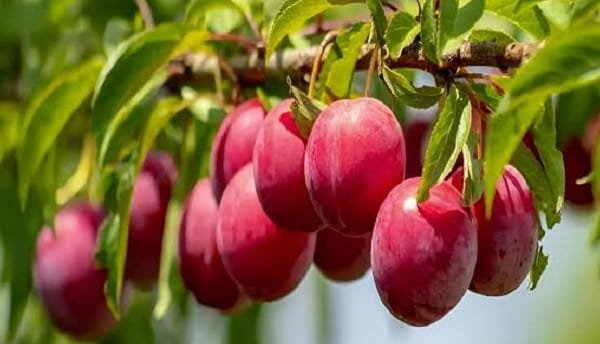
Satluj Purple is Punjab’s leading commercial plum and one of India’s best-known low-chill Japanese plums. Its early harvest, good yield and attractive crimson colour make it valuable in the plains before hill plums reach the market.
- Regional belts: Punjab and adjoining subtropical areas of Haryana, Jammu and north-western India.
- Fruit profile: Medium-large round fruit, about 25-30 g, with crimson skin and firm yellow-orange flesh.
- Flavor & quality: Sweet, around 13-14% TSS; suitable for fresh eating as well as processing.
- Harvest & yield: Ripens in the first week of May; PAU reports about 40 kg per tree.
- Pollination: Self-unfruitful, so Kala Amritsari is commonly planted as a pollinizer.
2. Kala Amritsari
Kala Amritsari is a classic indigenous Punjab plum and an essential companion to Satluj Purple. It is self-fruitful, productive and especially useful for processing because its dark fruit and acidity make excellent jam.
- Regional belts: Punjab and other low-chill subtropical plum areas.
- Fruit profile: Medium, dark-purple fruit with yellow moderately juicy flesh.
- Flavor & quality: About 15% TSS with noticeable acidity and a strong sweet-tart character.
- Harvest & yield: Ripens around mid-May; traditional descriptions report about 45 kg per tree.
- Special value: Also used as a pollinizer and PAU-recommended rootstock for Satluj Purple.
3. Titron
Titron is a useful mid-season low-chill plum for growers who want to extend harvest beyond Punjab’s earliest cultivars. It has performed well in regional trials and is noted for strong soluble-solids content.
- Regional belts: Punjab and similar subtropical north-western conditions.
- Season: Usually ripens around the second week of May in Punjab trials.
- Fruit quality: Recorded among the higher-TSS cultivars in comparative PAU evaluation.
- Best uses: Fresh eating and processing where a sweeter mid-season plum is useful.
4. Frontier
Frontier is an introduced Japanese plum showing strong promise under Punjab conditions. Recent PAU research found good fruit size, useful yield and self-compatibility, making it interesting for future subtropical orchards.
- Regional fit: Currently evaluated for Punjab and similar north-western conditions.
- Fruit profile: Large attractive fruit; recent PAU work found fruit weight second only to Satluj Purple among tested genotypes.
- Pollination: Self-compatible, which can simplify orchard design.
- 2026 relevance: A 2024 PAU study identified Frontier among the strongest genotypes for further evaluation.
5. Sharps Early
Sharps Early is another promising low-chill plum emerging from Punjab research. Its early maturity, high fruit set and self-compatibility make it particularly interesting for growers targeting the first plum market of the season.
- Regional fit: Under evaluation in Punjab and similar subtropical environments.
- Season: Harvest broadly overlaps with Satluj Purple and Kala Amritsari in the first half of May.
- Fruit performance: PAU research recorded high fruit set and retention with good fruit quality.
- Pollination: Self-compatible, reducing dependence on a separate pollinizer.
6. Santa Rosa
Santa Rosa is one of the classic Japanese plums grown in India’s temperate fruit regions. Its purple-red skin, juicy flesh and lively sweet-tart flavour make it a dependable dessert plum for hill orchards.
- Regional belts: Himachal Pradesh, Uttarakhand, Jammu & Kashmir and other suitable hill environments.
- Fruit profile: Medium to large purple-red fruit with juicy yellow flesh, often pink near the skin.
- Flavor: Aromatic, juicy and tangy-sweet.
- Best uses: Fresh eating, preserves and jam.
- Growing note: Needs much more winter chilling than Punjab low-chill cultivars.
7. Beauty
Beauty is an early Japanese plum traditionally grown in temperate Indian orchards. It is valued for attractive red fruit and early maturity, helping hill growers spread their harvest season.
- Regional belts: Temperate orchards of Himachal Pradesh, Uttarakhand and similar hill regions.
- Fruit profile: Medium red fruit with juicy flesh and good fresh-market colour.
- Season: An early-ripening temperate plum.
- Pollination: Generally considered self-fruitful, though good bee activity improves fruit set.
8. Mariposa
Mariposa is a premium Japanese plum recognised for rich red-purple skin and coloured flesh. Its appearance and flavour give it strong appeal for fresh markets and visually attractive desserts or preserves.
- Regional belts: Cooler hill areas with adequate winter chilling.
- Fruit profile: Large red to purple fruit with firm reddish flesh.
- Flavor: Sweet, rich and aromatic when fully mature.
- Best uses: Premium fresh fruit, desserts and preserves.
9. Black Amber
Black Amber gives this list a strong current Himachal Pradesh angle. Dr Y.S. Parmar University of Horticulture and Forestry has recommended it for Kullu Valley during its 2020-2026 technology programme.
- Recommended belt: Kullu Valley and temperate sites with comparable chilling.
- Fruit profile: Large dark-purple to nearly black fruit with firm flesh.
- Market strength: Excellent visual appeal for premium fresh sales.
- 2026 relevance: One of the newer plum recommendations highlighted by the university’s Bajaura research station.
10. Angelino
Angelino is another modern plum now recommended for Kullu Valley and is particularly useful for late-season marketing. Its dark skin and firm flesh give it better handling and market-life potential than many softer early plums.
- Recommended belt: Kullu Valley and similar temperate Himalayan sites.
- Fruit profile: Dark purple to black skin with firm flesh.
- Season: Late maturing, extending plum availability after many traditional cultivars finish.
- 2026 relevance: Recommended by Dr Y.S. Parmar University for Kullu Valley in its 2020-2026 programme.
Practical Grower’s Guide: How to Choose a Plum Variety
- Match chilling requirement first: Satluj Purple and Kala Amritsari suit low-chill plains; Santa Rosa, Black Amber and Angelino need colder hill winters.
- Plan pollinizers: Satluj Purple is self-unfruitful and benefits from Kala Amritsari. Check compatibility before planting a single-variety block.
- Spread the harvest: Combining early, mid-season and late cultivars reduces market gluts and extends the selling period.
- Thin heavy crops: Plums can overset; thinning improves fruit size, colour and sweetness.
- Handle gently: Harvest at firm-ripe stage and cool quickly because plum is highly perishable.
Conclusion
India’s plum diversity spans two very different production systems: low-chill orchards in the plains and colder Himalayan orchards. Satluj Purple and Kala Amritsari remain dependable subtropical choices, while Frontier and Sharps Early show new promise. In the hills, Santa Rosa, Mariposa and newer Kullu recommendations such as Black Amber and Angelino widen both fruit quality and harvest season.
Frequently Asked Questions
Q. Which plum variety is best for Punjab?
Satluj Purple is the main commercial choice because it is low-chill, early and productive. Kala Amritsari is also important as a pollinizer and processing plum.
Q. Which plum variety is best for Himachal Pradesh?
No single variety suits every altitude. Santa Rosa is a classic hill plum, while Black Amber and Angelino have recently been recommended for Kullu Valley.
Q. Which plum variety ripens earliest in the plains?
Satluj Purple and Kala Amritsari are among the earliest important Punjab plums, maturing during the first part of May. Sharps Early also shows promise in a similar window.
Q. Which plum is best for processing?
Kala Amritsari is especially valued for jam because of its dark colour and sweet-tart flavour. Satluj Purple is also useful for beverages and processing.