Nike is the world’s most counterfeited footwear brand. From street vendors and grey-market websites to even seemingly legitimate retail platforms, fake Nike shoes flood the market at every price point — some so convincingly made that casual buyers cannot tell them apart from the real thing. Whether you are buying a pair of Air Force 1s, Air Jordans, Air Max, or any other Nike model, knowing how to authenticate them before or after purchase can save you from wasting money on a fake.
This guide covers every reliable method to verify Nike shoe authenticity — from the official Nike app and barcode scanner to hands-on physical checks covering the Swoosh logo, stitching, insole label, box, and construction quality. Whether you are buying in-store, online, or checking a pair you already own, these steps will give you a confident answer.
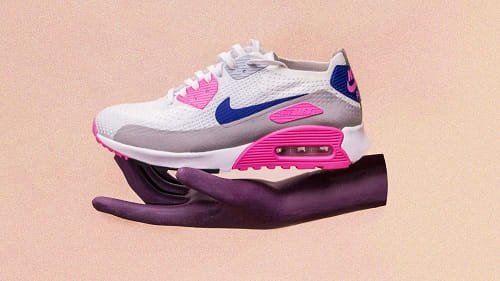
Why Verifying Nike Shoe Authenticity Matters
Buying counterfeit Nike shoes affects you in several important ways:
- Financial loss: Fake Nike shoes sold at near-authentic prices can cost thousands of rupees for a product worth a fraction of that amount in actual materials and quality.
- Performance and safety: Authentic Nike shoes are engineered with specific cushioning, support, and stability technologies. Fakes use inferior materials that wear out quickly and may cause foot, knee, or back injuries during sports.
- No returns or warranty: Fake shoes cannot be returned to Nike or any authorised retailer — you lose the protection of warranty and return policies.
- Supporting criminal activity: The counterfeit goods industry is linked to broader criminal networks — buying fakes inadvertently funds these operations.
- Resale value: If you ever want to resell the shoes, buyers and authentication platforms will flag fakes, making them worthless on the second-hand market.
- Brand loyalty and trust: Knowing you own genuine Nike products means you can trust the performance claims, fit consistency, and material quality that the brand is known for.
Method 1: Verify via the Nike App or Official Nike Website
The most direct and authoritative way to verify Nike shoes is through Nike’s own official app and website. Every legitimate Nike product sold through authorised channels can be verified using its style code or barcode.
Steps to Follow:
- Download the official Nike app from the Google Play Store or Apple App Store.
- Find the style code on your Nike shoes — it is printed on the insole tag, the white label on the tongue, or on the shoebox label. It typically looks like this: DH2987-101 or CV8839-001.
- Open the Nike app and use the search bar to enter the style code.
- If the style code returns a matching product page with the correct colourway, sizing, and product description — this is a good sign the shoe is genuine.
- Alternatively, visit https://www.nike.com and search the style code directly — authentic Nike products will have a product page with detailed specifications.
- Cross-reference the colour code (the numbers after the hyphen in the style code) with the actual colour of the shoe — for example, -101 typically represents white/black. If the shoe’s colours do not match the colour code, it may be a fake or a mislabelled counterfeit.
- Note: a style code match on the Nike website confirms the shoe model exists — it does not by itself guarantee the specific pair in your hands is genuine. Combine this check with the physical inspection methods below.
Pro Tip: Use the Nike app’s Scan feature (if available in your region) to scan the barcode on the shoebox — this links directly to the product page and provides the most comprehensive product verification Nike officially offers.
Method 2: Inspect the Swoosh Logo and Branding
The Swoosh logo is Nike’s most recognisable element — and also one of the most revealing indicators of authenticity. Counterfeiters frequently get the proportions, stitching, and placement slightly wrong.
Steps to Follow:
- Examine the Swoosh shape: on authentic Nike shoes, the Swoosh is a smooth, fluid curve that begins thin on the left, sweeps upward in a fluid arc, and ends with a slightly tapered point on the right. Fakes often have Swooshes that are too thick, too thin, asymmetrical, or have uneven curvature.
- Check Swoosh stitching: on stitched Swooshes (such as on Air Force 1s and many retro models), the stitching should be tight, even, and follow the exact edge of the Swoosh without any loose threads or irregular spacing.
- Check both shoes for symmetry: the Swoosh on the left shoe should be a mirror image of the Swoosh on the right shoe — same height, same angle, same curvature. Fakes often show slight differences between the two.
- Check the “NIKE” text and font: the word NIKE when printed on the shoe should use the exact Nike Futura font — clean, bold, with consistent letter spacing. Any distortion, blurring, or incorrect font weight is a warning sign.
- Inspect the “Just Do It” slogan or any other branded text for spelling accuracy, font consistency, and correct positioning — counterfeiters occasionally misspell brand text.
Pro Tip: Use your phone’s camera to zoom in on the Swoosh and compare it side by side with a high-resolution photo from Nike’s official website. Small proportion differences that are hard to see with the naked eye often become obvious when zoomed in.
Method 3: Check the Insole Label and Tongue Tag
Every authentic Nike shoe has a standardised label system on the insole and the tongue. These labels contain specific information in a specific format — and counterfeit versions almost always have errors, inconsistencies, or poor print quality in these labels.
Steps to Follow:
- Remove the insole and look at the label on the bottom of the insole or inside the shoe. Authentic Nike insole labels include: the shoe’s style code (e.g., DH2987-101), the size in multiple measurements (US, UK, EU, CM), the country of manufacture, and a barcode.
- Check that all size conversions are mathematically consistent — a US 9 should correspond to UK 8 and EU 42.5. If the size conversions do not match standard Nike sizing charts, the shoe is likely fake.
- Inspect the tongue label: it should show the Swoosh logo, Nike branding, shoe name, and care instructions. The font should be sharp and clean — not blurry, smudged, or slightly off-centre.
- Check the country of manufacture: most authentic Nike shoes are manufactured in Vietnam, Indonesia, China, or India. “Made in Vietnam” is the most common authentic origin. If the label says something unusual or is absent entirely, treat it as suspicious.
- Check the barcode on the insole label: scan it with any barcode scanning app. An authentic Nike barcode will resolve to the correct Nike product. A barcode that leads to a blank page, unrelated product, or error is a red flag.
- Feel the label’s print quality: authentic Nike labels are printed with sharp, professional ink on quality material. Fakes often have labels that feel thin, papery, or have ink that rubs off easily.
Note: Both shoes in a genuine pair will have identical insole labels — same style code, same size markings. A mismatch between the two shoes’ labels is a definitive sign of a counterfeit.
Method 4: Inspect the Shoebox and Packaging
Authentic Nike shoes always come in a specific, standardised box. The quality of the packaging is one of the most accessible and revealing authenticity checks available — and fakers rarely invest in perfectly replicating the box.
Steps to Follow:
- Inspect the box construction: genuine Nike boxes are made from thick, sturdy cardboard with clean, sharp edges and a tight-fitting lid. Fake boxes often feel flimsy, have uneven edges, or the lid does not sit flush.
- Check the Nike logo on the box: the Swoosh and NIKE text on the box should be printed in crisp, bold ink — not fuzzy or slightly off-register. Both sides of the box should have identical, aligned logos.
- Examine the box label: every authentic Nike box has a label on one end showing the style number, colour code, size, and barcode — in a consistent, standardised format. The font should be clean, the barcode should scan correctly, and all information should match what is printed on the insole label.
- Check that the style code, colour code, and size on the box label exactly match the style code and size on the insole label of the shoe inside. Any mismatch is a serious red flag.
- Look at the tissue paper and extras: authentic Nike shoes are wrapped in tissue paper, sometimes with a shoe bag, hang tag, or extra laces included depending on the model. The tissue paper on genuine pairs is plain white — counterfeit packaging sometimes uses coloured or logo-printed tissue.
- Smell the box and shoes: authentic Nike products have a characteristic mild rubber and fabric scent. A strong chemical smell, glue odour, or plastic smell is often associated with counterfeit manufacturing using inferior adhesives.
Pro Tip: Google the exact Nike model and check what the original box looks like — including the exact shade of the orange box, the position of the Swoosh, and what extras come included. Comparing side by side with the box in your hands takes 30 seconds and can reveal obvious discrepancies.
Method 5: Examine Stitching, Construction, and Material Quality
Nike’s manufacturing quality is a significant part of what you pay for. Genuine Nike shoes are constructed with consistent, precise stitching, premium materials, and clean finishes. Counterfeit shoes frequently cut corners in these areas.
Steps to Follow:
- Check overall stitching: run your fingers along all stitched areas — Swoosh, toe box, heel counter, and tongue attachment. Stitching on genuine Nike shoes is tight, even, and consistent with no loose threads, skipped stitches, or puckering.
- Inspect the midsole and outsole join: the point where the midsole (the foam layer) meets the outsole (the rubber bottom) should be clean, flush, and evenly glued on authentic pairs. Fakes often show excess glue, uneven joins, or gaps.
- Feel the midsole foam: authentic Nike cushioning foam (Air, React, Zoom Air) has a specific density and bounce-back quality. If the midsole feels unusually hard, soft, or hollow compared to what is described on Nike’s website, the shoe may be fake.
- Examine the upper material: leather uppers (as on Air Force 1s) should have a consistent grain pattern, clean edges, and no cracking. Mesh uppers should feel breathable and evenly stretched. Fakes often use lower-grade materials that look slightly different in texture and sheen.
- Check symmetry throughout: both shoes in the pair should be identical in every way — stitch count, material texture, height of the sole stack, and colour consistency. Any noticeable difference between the left and right shoe is a sign of fake production.
Note: High-quality “super fakes” can be very difficult to distinguish from genuine shoes based on construction alone. When significant money is involved, always combine physical checks with the official app verification and a purchase from an authorised retailer.
Method 6: Use a Third-Party Authentication Service or App
For high-value Nike releases — limited editions, Air Jordans, Air Max collectibles, or shoes purchased second-hand — professional authentication services provide expert verification that goes far beyond a casual visual check.
Via Authentication Apps:
- Download a sneaker authentication app such as CheckCheck, Legit App, or Entrupy (available on Play Store and App Store).
- Follow the app’s instructions to photograph specific parts of the shoe — typically the Swoosh, insole label, outsole, heel, and tongue tag — in standardised conditions.
- Submit the photos for AI-based or expert human review. Results typically arrive within a few minutes to 24 hours depending on the service.
- The app will return a verdict: Legit, Fake, or Inconclusive — along with details of any suspicious findings.
Via Physical Authentication Centres:
- In India, platforms like GOAT, StockX, and some specialised sneaker resale shops offer in-person or submission-based authentication for a fee.
- Ship or bring the shoes to the authentication centre — they will conduct a detailed physical inspection.
- A certificate of authenticity (COA) is issued for genuine shoes — this is particularly valuable for resale purposes.
- International services like GOAT and StockX authenticate shoes as part of their buying and selling process — every shoe sold through these platforms has already been physically verified.
Pro Tip: For Nike Air Jordans and any limited-release Nike sneakers, always use CheckCheck or a similar dedicated authentication app before completing a secondary market purchase — these models attract the highest density of sophisticated counterfeits.
Quick Reference: Nike Authenticity Check Methods
Use this table to choose the best verification method based on your situation:
| Method | Best Use Case | Requirements |
| Nike App / Website | Style code + colour code verification | App or browser + style code |
| Swoosh Logo Inspection | Quick visual authenticity screen | Eyes + reference photo from Nike.com |
| Insole Label + Tongue Tag | Label accuracy + size consistency check | The shoe itself |
| Shoebox + Packaging | Packaging quality + label matching | Original box + shoe |
| Stitching + Material Quality | Construction-level physical check | The shoe + hands-on inspection |
| Authentication App / Service | High-value or secondary market purchases | Photos or physical submission + fee |
Common Red Flags That Indicate Fake Nike Shoes
If you notice any of the following warning signs, the shoes are very likely counterfeit:
| Area | Red Flag |
| Price | Significantly below the official retail price — genuine Nike shoes are never sold at deep discounts by authorised sellers |
| Swoosh Logo | Uneven curvature, wrong proportions, thick edges, or asymmetry between left and right shoe |
| Insole Label | Missing, blurry, incorrect font, size conversions that do not match standard Nike sizing, or no barcode |
| Shoebox | Thin cardboard, smudged printing, style code on box does not match insole label |
| Stitching | Loose threads, uneven spacing, puckering, or stitching that runs outside the intended seam line |
| Smell | Strong chemical, glue, or plastic odour from the shoe or box |
| Seller | No authorised retailer badge, no returns policy, no receipt provided, street vendor or unknown website |
| Style Code | Does not appear on Nike’s official website, or colourway does not match the shoe in hand |
Where to Buy Authentic Nike Shoes in India
The most effective way to guarantee authenticity is to buy from authorised sources. Here are the safest purchasing channels in India:
- com India: The official Nike India website (https://www.nike.com/in) is the most reliable source — every product sold here is guaranteed authentic.
- Nike Experience Stores and Nike Factory Stores: Physical stores in major Indian cities including Mumbai, Delhi, Bengaluru, Hyderabad, and Chennai are fully authorised and carry only genuine products.
- Authorised retail partners: Major sports retailers including Decathlon, Sports Direct, Foot Locker India, and department stores like Lifestyle and Shoppers Stop are authorised Nike retailers.
- Flipkart and Amazon with “Sold by Nike” tag: On these platforms, only purchases listed as “Sold by Nike” or “Fulfilled by Nike” are guaranteed authentic — third-party sellers on these platforms may carry fakes.
- GOAT and StockX (for secondary market): These platforms authenticate every pair before shipping — they are the safest option for buying limited or sold-out Nike releases second-hand.
Conclusion
Verifying Nike shoe authenticity does not require expert knowledge — it requires attention to detail and a systematic approach. Check the style code on the Nike app, inspect the Swoosh logo and insole label, examine the box, and assess the construction quality. Used together, these five minutes of checking will almost always give you a clear answer.
The safest long-term approach is always to buy from Nike’s official channels or authorised retailers — where authenticity is guaranteed and returns are hassle-free. For secondary market purchases, a dedicated authentication app or service is a small investment that protects a much larger one. Real Nike shoes are worth every rupee — make sure that is exactly what you are getting.

Santosh Kumar, the author behind IndiasStuffs.com, is passionate about sharing valuable insights on a variety of topics, including lifestyle, technology, and Indian culture.
Page Contents