Some kingdoms are built on power. Others are built on fear. Paurashpur takes you into a world where both exist together. This is not a soft historical drama—it’s a harsh, exaggerated, and often uncomfortable look at a fictional kingdom ruled by cruelty, desire, and control.
Right from the beginning, the series sets a different tone. There is no attempt to glorify royalty. Instead, it shows the darker side—how power can corrupt, how women are treated in a patriarchal system, and how rebellion slowly begins from within. It’s bold, dramatic, and at times shocking, but that’s exactly the space it wants to occupy.
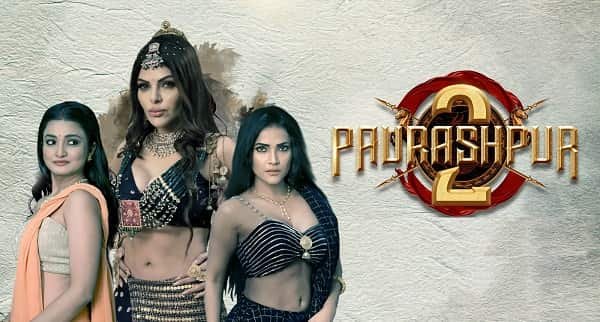
Cast and Crew
The series features a large ensemble cast across multiple seasons, with both experienced actors and bold new faces.
Main Cast
- Annu Kapoor as Maharaja Bhadrapratap Singh
- Shilpa Shinde as Queen Meerawati
- Milind Soman as Boris
- Shaheer Sheikh as Veer Singh
- Flora Saini as Nayantara
- Poulomi Das as Kala
- Sahil Salathia as Bhanu
- Anant Joshi as Prince Aditya
- Aditya Lal as Prince Ranveer
Season 2 & 3 Key Cast
- Sherlyn Chopra as Maharani Snehalata
- Payel Raha as Nayanprabha
- Muskaan Agrawal
- Kajol Tyagi
- Suhana Khan and others
The casting is one of the highlights. Annu Kapoor brings intensity to the ruthless king, while Shilpa Shinde and Milind Soman add strong contrasting layers to the story.
Crew
- Created by Baljit Singh Chaddha
- Directed by Sachindra Vats, Yogesh Ojha, and KayCee (across seasons)
- Produced by Sachin Mohite
- Production House: Jaasvand Entertainment
The direction focuses on visual drama—grand sets, heavy costumes, and a theatrical style that matches the exaggerated tone of the story.
OTT Platform & Release
- OTT Platform: ALTBalaji & ZEE5
- Season 1 Release Date: 29 December 2020
- Season 2 Release: July 2023
- Season 3 Release: May 2024
Later seasons have also been available through platforms like Airtel Xstream (via partner streaming).
Story
The story is set in a fictional kingdom called Paurashpur.
At the center is King Bhadrapratap Singh—a cruel ruler who treats women as objects and uses power without limits. His kingdom is built on fear, and his rule is absolute.
But beneath this control, resistance is growing.
Queen Meerawati is not a silent character. She understands the system and begins to play her own game. At the same time, characters like Boris challenge the very foundation of patriarchy and gender roles.
As the story moves forward:
- Power struggles intensify inside the palace
- Secrets begin to surface
- Relationships turn into political tools
Each season adds more layers—new queens, new conspiracies, and new conflicts over control of the throne.
The series explores:
- Patriarchy and gender inequality
- Power politics within royalty
- Desire, betrayal, and revenge
- Rebellion against oppressive systems
Instead of a single storyline, it moves through multiple characters, each trying to gain control in their own way.
What Makes It Stand Out
- Bold and controversial theme
- Heavy focus on power and gender politics
- Grand period setting with stylized presentation
- Multiple strong female characters driving the story
The show doesn’t try to be subtle. It openly explores its themes, which makes it very different from traditional historical dramas.
Reception and Audience Appeal
Paurashpur received mixed reactions. While some viewers appreciated its bold concept and visuals, others criticized it for excessive content and weak writing.
It mainly appeals to:
- Viewers who enjoy bold period dramas
- Fans of political and power-based storytelling
- Those interested in unconventional historical fiction
Final Thoughts
Paurashpur is not a typical royal story.
It’s a kingdom where power dominates everything—and where rebellion begins quietly.
Kings rule with fear. Queens fight with strategy. And every decision carries consequences.
If you prefer bold, dramatic, and visually rich series with strong themes, Paurashpur is worth exploring.