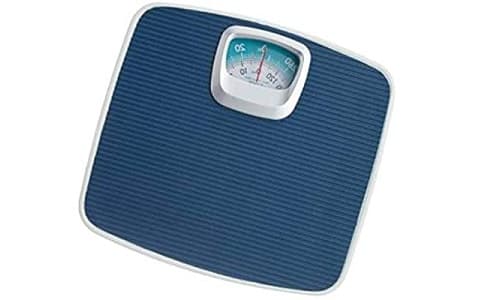
Not everyone has a weighing scale at home — and even when you do, it is not always accurate, available, or accessible. Whether you are travelling, at a remote location, on a fitness journey with no scale nearby, or simply curious about whether your weight has changed — there are several practical and surprisingly reliable ways to estimate or check your body weight without using a traditional weight machine.
From smartphone apps and BMI-based estimation to water displacement and body measurement techniques, this guide covers every available method — explaining how each works, how to apply it step by step, and how accurate it is likely to be. While none of these methods replace a calibrated digital scale for exact measurements, they can give you a very useful and reasonably accurate picture of your weight when a scale is not at hand.
When Do You Need to Check Weight Without a Scale?
There are more everyday situations than you might expect where scale-free weight estimation is genuinely useful:
- Travelling or staying away from home: Hotel rooms, hostels, and guest houses rarely have weighing scales — but your fitness routine does not have to pause.
- Monitoring progress between weigh-ins: If you weigh yourself weekly but want a mid-week sense of whether you are on track, body measurements and visual cues can fill the gap.
- Checking luggage weight: Estimating the weight of a bag or suitcase before heading to the airport avoids excess baggage fees.
- Children and elderly care: In situations where getting a person onto a scale is difficult, body measurement estimates provide useful reference data for doctors and caregivers.
- Fitness goal tracking: Athletes and fitness enthusiasts often track body composition changes through measurements and visual progress photos rather than relying solely on the scale.
- Medical or dietary planning: Approximate weight is needed for calculating calorie requirements, medication dosages, and nutritional plans when a scale is unavailable.
Method 1: Use a Smartphone Weight Estimation App
Several mobile apps use a combination of your height, age, gender, body measurements, and in some cases your phone’s camera or sensors to estimate your body weight and composition. While not medical-grade tools, they can give a reasonable estimate when used correctly.
Steps to Follow:
- Search the Google Play Store or Apple App Store for “weight estimator” or “body weight calculator” apps — reputable options include BMI Calculator apps, Noom, or body measurement tracker apps.
- Open the chosen app and enter the required inputs: your height (in cm or feet/inches), age, gender, and any body measurements the app requests such as waist circumference, hip measurement, or wrist size.
- Some apps use your phone camera to perform a visual body scan — follow the on-screen instructions to take front and side profile photos in fitted clothing for a more accurate result.
- The app will calculate an estimated weight based on standard body composition formulas — typically returning a range rather than a single number.
- Use this as a reference estimate, not an absolute measurement. Check the result against your known previous weight for context.
- Apps that combine multiple measurements — height, waist, hip, and neck — tend to be significantly more accurate than those using height and age alone.
Pro Tip: The US Navy Body Fat Formula — which uses neck, waist, and hip measurements — is one of the most accurate non-scale weight and body composition estimation methods. Many free online calculators implement this formula.
Method 2: Calculate BMI and Estimate Weight Using Height and Measurements
Body Mass Index (BMI) works in both directions — most people know you can calculate BMI from height and weight, but you can also reverse the calculation to estimate a weight range using just your height and a target or typical BMI value. Combined with body measurements, this gives a surprisingly useful weight estimate.
Steps to Follow:
- Measure your height accurately — stand against a wall without shoes and mark the highest point of your head. Measure from the floor to this mark in centimetres.
- Convert your height to metres if needed — for example, 170 cm = 1.70 m.
- Use the BMI formula in reverse: Weight (kg) = BMI x Height (m) x Height (m). A healthy BMI range is 18.5 to 24.9 for most adults.
- Calculate the weight range corresponding to a healthy BMI for your height. For example, for a height of 1.70 m: minimum healthy weight = 18.5 x 1.70 x 1.70 = 53.5 kg, and maximum healthy weight = 24.9 x 1.70 x 1.70 = 71.9 kg.
- Assess where you likely fall within this range using your waist measurement, clothing fit, and visual self-assessment — someone with a noticeably larger frame or more muscle mass will sit toward the upper end of the range.
- This method gives you a weight range rather than an exact figure — but it is very useful for understanding whether your weight is likely within a healthy range.
Note: BMI has known limitations — it does not account for muscle mass, bone density, or body fat distribution. Athletes and very muscular individuals may have a high BMI while being perfectly healthy. Use it as a directional guide rather than a definitive measure.
Method 3: Use Body Measurements as a Weight Proxy
Body measurements — particularly waist, hip, chest, thigh, and arm circumference — change in direct proportion to changes in body weight and composition. Tracking these measurements over time is one of the most practical and accurate ways to monitor whether your weight is going up, down, or staying the same without a scale.
Steps to Follow:
- Use a flexible measuring tape (available at any pharmacy or tailoring shop for a few rupees) to measure the following body parts.
- Waist: Measure at the narrowest point, usually just above the navel. Keep the tape parallel to the floor and do not suck in your stomach.
- Hips: Measure at the widest point of your hips and buttocks.
- Chest: Measure around the fullest part of your chest, arms relaxed at your sides.
- Upper arm: Measure around the widest part of your bicep, arm relaxed.
- Thigh: Measure around the widest part of one thigh.
- Record all measurements and compare them to your previous measurements or to standard reference ranges. A consistent reduction in waist measurement in particular is a reliable indicator of weight loss, even without a scale.
- As a rule of thumb, a reduction of approximately 2.5 cm (1 inch) in waist circumference typically corresponds to a loss of around 1 to 1.5 kg of body weight for most adults.
Pro Tip: Take all measurements at the same time of day — ideally in the morning before eating — and always use the same measuring tape. Consistency in technique matters more than the absolute numbers when tracking changes over time.
Method 4: Use Clothing Fit as a Weight Indicator
Your clothes are one of the most immediate and honest indicators of changes in your body weight — often before a scale even registers a meaningful shift. A pair of well-fitting jeans or a fitted shirt that you have worn for years provides a remarkably accurate reference point.
Steps to Follow:
- Select a specific item of clothing that you know fitted you well at a time when your weight was stable — a pair of jeans, a fitted shirt, or a dress works best.
- Put the item on and assess the fit: Does it fit the same, feel tighter, or feel looser than before?
- A significant tightening — particularly around the waist, thighs, or chest — suggests weight gain. A noticeably looser fit indicates weight loss.
- For a more systematic approach, designate one specific outfit as your “reference outfit” and try it on every two to three weeks at the same time of day (morning, before eating) for consistent comparison.
- Note which specific areas feel different — changes around the waist and abdomen are usually the first sign of weight change, while changes in the thighs and arms tend to follow later.
- Combine this observation with body measurements for a more complete picture of any changes.
Note: Clothing fit is a qualitative indicator — it tells you direction (gained or lost) but not a specific number. It is most useful as a supplement to other methods rather than a standalone weight check.
Method 5: Use Water Displacement (Archimedes Principle)
The Archimedes principle states that an object submerged in water displaces a volume of water equal to the object’s own volume. While this method directly measures volume rather than weight, it can be combined with known density values to estimate body weight — and is the basis of the most accurate body composition measurement techniques used in sports science.
Simplified Home Version (for objects, not people):
- Fill a large bucket or container completely to the brim with water and place it inside a larger tray to catch overflow.
- Slowly lower the object whose weight you want to estimate into the water — the water that overflows into the tray is equal in volume to the object.
- Carefully pour the overflowed water into a measuring jug and record the volume in millilitres.
- Since 1 ml of water weighs 1 gram, the volume of displaced water (in ml) equals the object’s volume (in cm³). For objects denser than water, you can estimate weight using their known average density.
- For human body weight, this method is used professionally in hydrostatic (underwater) weighing tanks. At home, it is more practical for estimating the weight of luggage, packages, or objects — not a full human body.
Note: For practical everyday weight estimation of your body, the measurement and BMI methods (Methods 2 and 3) are far more practical. The water displacement method is most useful for estimating the weight of objects and packages.
Method 6: Visit a Pharmacy, Gym, or Public Weighing Station
If you need an accurate weight reading and no scale is available at home, several easily accessible public locations offer free or low-cost weighing services — often with more accurate scales than typical household models.
Steps to Follow:
- Pharmacy or medical shop: Most pharmacies across India have a digital weighing scale available for customers — either free of charge or for a nominal fee of Rs. 1 to Rs. 5. These scales are regularly calibrated and often more accurate than home scales.
- Gym or fitness centre: If you are a member of a gym or fitness centre, the weighing scale near the changing rooms is available for use at any time. Many gyms also have body composition analysers that give fat percentage alongside weight.
- Government hospitals and health centres: PHCs (Primary Health Centres), government hospitals, and Anganwadi centres have calibrated weighing scales — these are particularly useful in rural areas.
- Railway stations: Indian Railways stations, particularly in larger cities, have coin-operated weighing machines on platforms — typically costing Rs. 1 to Rs. 2 per use.
- Supermarkets and malls: Some large supermarkets and health food stores have body weight scales available for customers near the health and wellness section.
- School or workplace medical room: Most workplaces with medical facilities and schools have a weighing scale in the nurse’s station or health room — these are generally accessible on request.
Pro Tip: For the most consistent readings across multiple public weighing locations, always weigh yourself at the same time of day — ideally in the morning, after using the bathroom, and before eating or drinking. Wear similar clothing each time.
Quick Reference: Weight Check Methods Without a Scale
Use this table to choose the best method based on your purpose and available resources:
| Method | Accuracy | Best Use Case |
| Smartphone App | Moderate | Quick estimate when travelling or at home |
| BMI Reverse Calculation | Moderate | Understanding healthy weight range for your height |
| Body Measurements | Good for tracking change | Monitoring weight loss or gain over time |
| Clothing Fit | Qualitative | Direction of change — gained or lost weight |
| Water Displacement | Good for objects | Estimating weight of luggage or packages |
| Pharmacy / Gym / Station Scale | High (calibrated) | Accurate reading without a home scale |
Healthy Weight Range by Height — Quick Reference
Use this table to estimate a healthy weight range for your height based on a BMI of 18.5 to 24.9 — the standard healthy range for adults:
| Height (cm) | Height (ft/in) | Min Weight (kg) | Max Weight (kg) |
| 150 cm | 4 ft 11 in | 41.6 kg | 56.2 kg |
| 155 cm | 5 ft 1 in | 44.4 kg | 59.9 kg |
| 160 cm | 5 ft 3 in | 47.4 kg | 63.8 kg |
| 165 cm | 5 ft 5 in | 50.3 kg | 67.8 kg |
| 170 cm | 5 ft 7 in | 53.5 kg | 71.9 kg |
| 175 cm | 5 ft 9 in | 56.7 kg | 76.3 kg |
| 180 cm | 5 ft 11 in | 59.9 kg | 80.7 kg |
| 185 cm | 6 ft 1 in | 63.3 kg | 85.2 kg |
Note: These ranges are based on standard BMI calculations for adults. They are guidelines, not absolutes — individual health, muscle mass, and body composition are important factors that a BMI-based range does not fully capture. Always consult a doctor or nutritionist for personalised health advice.
Tips for Getting the Most Accurate Estimate Without a Scale
To improve the accuracy of any scale-free weight estimation method, keep these practical guidelines in mind:
- Combine multiple methods: No single method without a scale is perfectly accurate on its own. Using two or three methods together — for example, BMI calculation plus body measurements plus clothing fit — gives you a much more reliable picture than any one method alone.
- Measure consistently: Always take measurements at the same time of day, in the same conditions, wearing similar clothing. Morning measurements before eating tend to be the most consistent.
- Use a proper measuring tape: A tailor’s flexible measuring tape gives far more accurate body measurements than a rigid ruler or an approximate estimate. These are available at any stationery or medical supply shop for under Rs. 50.
- Track changes rather than absolute numbers: Without a scale, the most valuable information is whether your measurements are going up, down, or staying the same — not the exact number. Consistent tracking over 2 to 4 weeks reveals a reliable trend.
- Factor in water retention and bloating: Body measurements and clothing fit can temporarily increase due to water retention, a heavy meal, or hormonal fluctuations — not actual fat gain. Always assess trends over multiple readings rather than reacting to a single data point.
- Visit a pharmacy scale monthly: Even without a home scale, a monthly visit to a pharmacy or gym scale provides an accurate checkpoint that anchors your other estimation methods to a real number.
Conclusion
Not having a weighing scale does not mean you are in the dark about your weight. Between body measurements, BMI-based estimation, smartphone apps, clothing fit assessments, and the widely available pharmacy or gym scales nearby — there are enough tools and techniques to give you a reliable, actionable picture of your body weight and how it is changing over time.
The key is consistency. Pick two or three methods that work for your lifestyle, apply them regularly at the same time and conditions, and focus on tracking the direction of change rather than obsessing over an exact number. Your body tells its own story through measurements, clothing, energy levels, and how you feel — and learning to read those signals is just as valuable as any number a scale can give you.