Karungali Malai has become very popular, especially among people who believe in spiritual energy, protection, and positive vibrations. You’ll often hear that it helps in removing negativity and balancing energy. Because of this rising demand, the market is now filled with duplicates.
Many sellers pass off ordinary wood or dyed beads as Karungali. To an untrained eye, everything looks similar. But if you know what to check, you can easily tell the difference.
Let’s go step by step and understand how to identify an original Karungali Malai at home.
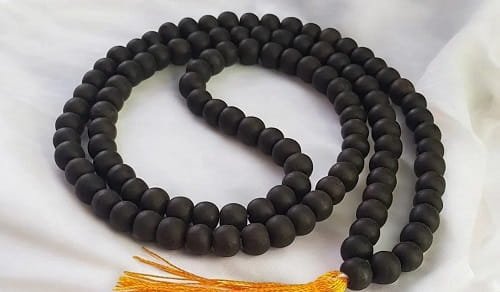
What is Karungali Malai?
Karungali comes from a special type of dense, dark wood (commonly linked with ebony-like trees). It is naturally:
- Deep black or dark brown
- Heavy compared to normal wood
- Smooth but not overly polished
- Associated with spiritual and traditional use
A “malai” simply means a bead necklace made from this wood.
Step 1: Check the Color (Natural vs Fake)
What to look for:
- Original Karungali is dark brown to deep black, not jet-black plastic-looking
- Color should be slightly uneven, not perfectly uniform
- Grain patterns may be faintly visible
Warning sign:
- If the beads look too shiny or perfectly black, they may be painted or polished artificially
Step 2: Feel the Weight (Very Important)
Karungali wood is dense and heavier than normal wood.
How to test:
- Hold the malai in your hand
- Compare it with a normal wooden mala if possible
Result:
- Original → Feels slightly heavy and solid
- Fake → Feels very light or hollow
This is one of the easiest ways to detect fake beads.
Step 3: Water Test (Quick Home Check)
Steps:
- Take a bowl of water
- Drop one bead (if removable) or gently dip part of the mala
Result:
- Original Karungali → Sinks in water
- Fake → May float or stay on surface
Why:
Dense wood sinks, while cheap or hollow materials float.
Don’t keep it soaked for long—just a quick test.
Step 4: Rub Test (Check for Artificial Color)
Steps:
- Take a white cloth
- Rub the beads firmly
Result:
- Original → No color comes off
- Fake → Black or brown color stains the cloth
This reveals if the beads are dyed or polished artificially.
Step 5: Smell Test (Natural Wood Aroma)
What to do:
- Rub the bead slightly to create friction
- Smell it closely
Result:
- Original → Mild natural woody smell
- Fake → No smell or chemical smell
Natural wood always carries a subtle earthy scent.
Step 6: Surface Texture Check
What to observe:
Original beads are:
- Smooth but not glass-like
- Slightly uneven if handmade
You may notice:
- Tiny grain lines
- Minor imperfections
Warning:
- Perfectly smooth, shiny, plastic-like finish = likely fake
Step 7: Heat Test (Advanced but Careful)
Do this only if you can test one loose bead.
Steps:
- Heat a pin slightly
- Touch it to the bead
Result:
- Original wood → No melting, only slight burn mark
- Fake plastic → Melts or smells like plastic
This test clearly separates wood from synthetic materials.
Step 8: Check the Price (Reality Check)
Karungali is not extremely cheap.
If you see:
- Very low price
- “Heavy discount” offers
Then be careful.
General idea:
- Original Karungali mala has a moderate to high price depending on bead size and quality
Too cheap usually means fake.
Step 9: Buy from Trusted Sellers
This step matters more than all tests combined.
Always:
- Buy from known spiritual stores
- Check reviews if buying online
- Ask about material details
Avoid random roadside or unknown sellers offering “pure Karungali” at very low prices.
Common Mistakes People Make
- Trusting only color
- Ignoring weight
- Not checking for dye
- Buying just because it “looks good”
- Falling for cheap deals
Quick Checklist (Use This Before Buying)
- Color is natural, not overly shiny
- Beads feel slightly heavy
- No color comes off when rubbed
- Sinks in water
- Has mild woody smell
- Texture is not plastic-smooth
If most of these match, chances are high it’s original.
Final Thoughts
Karungali Malai is not just a piece of jewelry—it carries cultural and spiritual value for many people. That’s exactly why fake versions are everywhere in the market.
The good thing is, you don’t need expert knowledge to identify the original. Just use simple checks like weight, water test, and texture. These small steps can save you from buying something fake.
Take your time before purchasing. Observe carefully. And once you understand the feel of real Karungali, you’ll never get confused again.