As energy efficiency becomes a growing priority in Indian construction, thermally broken aluminium windows have gained attention as a premium upgrade over standard aluminium systems. Understanding what a thermal break actually does — and whether it’s worth the added cost for your specific project — is essential before making this decision. This article compares the two options across performance, cost, and suitability.
What Is a Thermal Break?
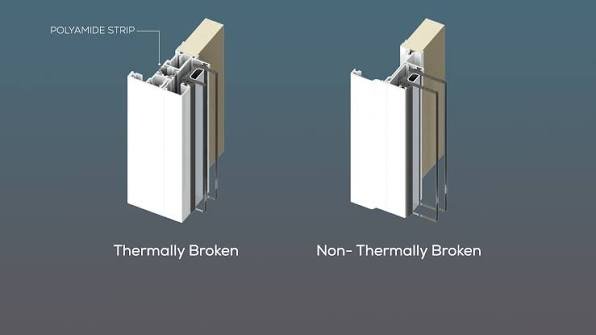
A thermal break is an insulating material, typically polyamide or a similar low-conductivity polymer, inserted between the interior and exterior sections of an aluminium window frame. This physically interrupts the direct metal-to-metal connection that would otherwise allow heat to transfer freely through the frame, significantly reducing the window’s overall thermal conductivity compared to a standard, uninterrupted aluminium profile.
Thermal Insulation Performance
This is the core differentiator between the two options. Standard aluminium conducts heat readily due to its continuous metal structure, leading to greater heat transfer between indoor and outdoor environments. Thermally broken aluminium significantly reduces this heat transfer, helping maintain more stable indoor temperatures and reducing the load on heating and cooling systems, particularly valuable in regions with extreme summer heat or winter cold.
Energy Cost Savings
Over time, the improved insulation of thermally broken aluminium can translate into measurable savings on heating and cooling costs, since the building’s climate control systems don’t need to work as hard to offset heat gain or loss through the window frames. The exact savings depend on climate zone, building orientation, and how much window area a project has, but the effect compounds meaningfully across a full building’s lifetime energy use.
Condensation Control
Standard aluminium’s high thermal conductivity can lead to condensation forming on interior frame surfaces in humid or temperature-variable conditions, since the metal surface temperature drops close to the outdoor temperature. Thermally broken profiles keep interior frame surfaces closer to room temperature, significantly reducing condensation risk — an important consideration in humid Indian climates where condensation can contribute to mould growth over time.
Cost Difference
Thermally broken aluminium windows come at a meaningful price premium over standard aluminium systems, reflecting the additional materials and more complex manufacturing process required to insert and bond the thermal break material into each profile. For budget-sensitive projects without extreme climate exposure, this added cost may not be justified, but for premium projects or extreme-climate regions, it often pays for itself over time through energy savings.
Structural Performance
Both standard and thermally broken aluminium profiles offer strong structural performance suitable for most residential and commercial window applications. The thermal break material is engineered to maintain structural integrity while providing insulation, so buyers need not worry about a meaningful trade-off in strength when choosing a thermally broken system from a reputable manufacturer.
Suitability by Climate Zone
In India’s more temperate coastal and southern regions, standard aluminium may perform adequately without a significant comfort or cost penalty, making the thermal break upgrade less critical. In northern India’s colder winters, or in buildings with large glazed areas exposed to intense summer heat, thermally broken aluminium delivers a much more noticeable improvement in comfort and energy efficiency, making the investment more clearly worthwhile.
Application in Commercial vs Residential Projects
Thermally broken aluminium has become increasingly standard in premium commercial buildings and green-certified projects, where energy efficiency ratings and occupant comfort are closely scrutinised. In residential projects, the decision often comes down to budget and climate — premium homes in extreme climate zones increasingly specify thermally broken systems, while more budget-conscious residential projects in milder regions often still opt for standard aluminium.
Identifying Quality Thermal Break Systems
Not all thermally broken profiles are engineered equally, so it’s worth asking suppliers about the specific insulating material used, the width of the thermal break, and any independent testing or certification supporting their thermal performance claims. A poorly engineered thermal break can underperform compared to a well-designed standard aluminium system, so verifying manufacturer credentials matters as much as the thermal break feature itself.
Green Building Certification Relevance
As green building certifications like IGBC and GRIHA gain traction in Indian commercial and premium residential real estate, thermally broken aluminium windows have become an increasingly common specification for projects targeting these ratings, since window thermal performance directly contributes to a building’s overall energy efficiency score. Developers pursuing certification often find the thermal break investment justified by both the certification requirements and the resulting marketing value of a certified green building.
Retrofit Considerations for Existing Buildings
For renovation projects replacing old steel or wooden windows, upgrading directly to thermally broken aluminium can deliver a particularly noticeable improvement in comfort, since older window systems typically had minimal insulation to begin with. This makes thermal break upgrades an attractive option specifically for renovation and retrofit projects, where the contrast with the previous window performance tends to be more dramatic than in new construction being compared only against standard aluminium.
Working with Qualified Fabricators
Since the thermal performance benefit depends heavily on correct fabrication and installation, it’s worth confirming that your chosen fabricator has specific experience working with thermally broken profiles, including proper handling of the insulating barrier during cutting, joining, and glazing. Poor fabrication practices can compromise the thermal break’s effectiveness even when using a high-quality profile system, undermining the investment.
Conclusion
Thermally broken aluminium windows offer a genuine performance upgrade over standard aluminium, particularly for insulation, energy savings, and condensation control, but they come at a meaningful cost premium that may not be necessary for every project. Buyers in extreme climate zones, or those building premium or energy-conscious projects, are likely to find the investment worthwhile, while budget-focused projects in milder climates can often perform adequately with standard aluminium systems.