India is one of the world’s richest wildlife destinations. Its protected landscapes stretch from Himalayan valleys and high-altitude deserts to mangrove swamps, central Indian forests, grasslands and tropical hills. Across more than 100 national parks, travelers can encounter habitats used by tigers, elephants, rhinoceroses, lions, snow leopards, deer, crocodiles and an extraordinary variety of birds.
Conservation programs such as Project Tiger and Project Elephant have played an important role in protecting flagship species and the ecosystems they depend on. For visitors, these parks offer much more than a chance to spot a famous animal. They reveal how forests, wetlands, rivers and mountain habitats work together as living systems.
1. Jim Corbett National Park, Uttarakhand
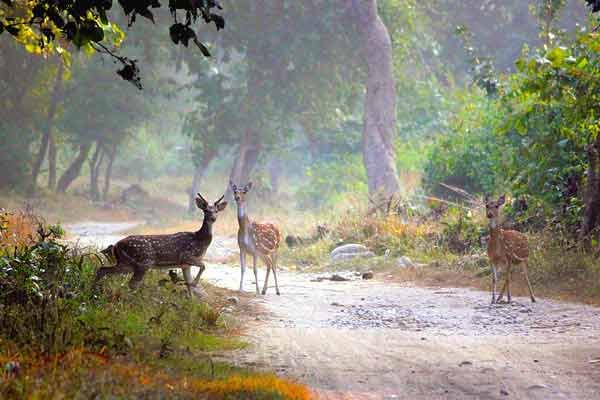
India’s oldest national park is a classic Himalayan foothill wilderness of sal forest, grassland and the Ramganga river valley. Tigers are the headline attraction, but elephant herds, deer, gharials and prolific birdlife make every safari rewarding.
- Landscape: Uttarakhand; sal forest, grassland and riverine habitat.
- Wildlife: Bengal tiger, Asian elephant, sambar, spotted deer and gharial.
- Safari: Jeep safaris in Bijrani, Jhirna, Dhela and Durga Devi; canters serve Dhikala.
- Best time & access: November-June; Ramnagar railhead and Pantnagar airport.
2. Kaziranga National Park, Assam
Kaziranga is a UNESCO World Heritage Site spread across the floodplains of the Brahmaputra. Tall elephant grass, wetlands and woodland support one of the world’s greatest populations of the one-horned rhinoceros, alongside wild buffalo, elephants and tigers.
- Landscape: Assam; floodplain grassland, marshes, wetlands and woodland.
- Wildlife: One-horned rhinoceros, wild buffalo, elephant, tiger and swamp deer.
- Safari: Jeep safaris in Kohora, Bagori, Agoratoli and Burapahar; designated elephant rides may operate.
- Best time & access: November-April; Jorhat is a convenient airport gateway.
3. Ranthambore National Park, Rajasthan
Ranthambore combines dry forest, lakes, rocky ridges and the ruins of an imposing historic fort. Tigers are often the focus, while leopards, sloth bears, sambar and crocodiles add depth to a safari through this dramatic Rajasthan landscape.
- Landscape: Rajasthan; dry deciduous forest, lakes, cliffs and scrub.
- Wildlife: Bengal tiger, leopard, sloth bear, sambar, nilgai and crocodile.
- Safari: Jeep and canter safaris operate across numbered tourism zones.
- Best time & access: October-June; Sawai Madhopur railhead and Jaipur airport.
4. Kanha National Park, Madhya Pradesh
Kanha is famous for broad meadows surrounded by sal and bamboo forests. The scenery is often associated with the central Indian world of The Jungle Book, while its greatest conservation achievement is the recovery of the rare hard-ground barasingha.
- Landscape: Madhya Pradesh; sal forest, bamboo and open meadows.
- Wildlife: Tiger, hard-ground barasingha, gaur, dhole, sambar and sloth bear.
- Safari: Jeep safaris cover Kanha, Kisli, Mukki and Sarhi zones.
- Best time & access: Mid-October-June; Jabalpur is a major transport gateway.
5. Bandhavgarh National Park, Madhya Pradesh
Bandhavgarh packs forest, rocky hills, caves and ancient remains into a relatively compact landscape. It is particularly well known for tiger viewing and photography, although sightings always depend on wildlife movement and luck on the day.
- Landscape: Madhya Pradesh; sal forest, bamboo, meadows and rocky hills.
- Wildlife: Bengal tiger, leopard, dhole, sloth bear, chital and sambar.
- Safari: Jeep safaris mainly use Tala, Magadhi and Khitauli zones.
- Best time & access: Mid-October-mid-June; Umaria railhead and Jabalpur airport.
6. Gir National Park, Gujarat
Gir is the only natural home of the Asiatic lion in the wild. Its dry woodland, thorn scrub and seasonal streams create a rugged setting quite different from India’s wetter tiger forests. Leopards, deer and crocodiles are important supporting attractions.
- Landscape: Gujarat; dry woodland, thorn scrub and seasonal river systems.
- Wildlife: Asiatic lion, leopard, chital, sambar, nilgai and crocodile.
- Safari: Open vehicles use the Gir Jungle Trail; Devalia provides a separate interpretation-zone experience.
- Best time & access: Mid-October-mid-June; Keshod airport, Junagadh and Veraval railheads.
7. Sundarbans National Park, West Bengal
The Sundarbans is a UNESCO-listed mangrove wilderness shaped by tides, creeks and muddy islands. Its Royal Bengal tigers are powerful swimmers and notoriously difficult to spot, making the wider ecosystem of crocodiles, deer, birds and waterways the real experience.
- Landscape: West Bengal; tidal mangroves, estuaries, creeks and mudflats.
- Wildlife: Bengal tiger, spotted deer, estuarine crocodile, fishing cat and waterbirds.
- Safari: Exploration is mainly by licensed boat, with watchtower stops on selected routes.
- Best time & access: November-February/March; Canning railhead and Kolkata airport.
8. Periyar National Park, Kerala
Periyar offers one of India’s most scenic wildlife experiences around the waters of Periyar Lake. Elephants, gaur and deer may appear along the forested shoreline, while boating and guided nature activities make the reserve especially suitable for families and eco-travelers.
- Landscape: Kerala; Western Ghats forest surrounding Periyar Lake.
- Wildlife: Asian elephant, gaur, sambar, wild boar, otter and birds.
- Safari: Boat cruises, nature walks and regulated eco-tourism activities.
- Best time & access: September-March; Kottayam railhead, Madurai or Kochi airports.
9. Bandipur National Park, Karnataka
Bandipur is part of the Nilgiri Biosphere Reserve and a key wildlife corridor in southern India. Teak, bamboo and dry deciduous forest support large elephant herds as well as tigers, leopards, gaurs and dholes.
- Landscape: Karnataka; teak, bamboo, dry forest and grassy clearings.
- Wildlife: Asian elephant, tiger, leopard, gaur, dhole and deer.
- Safari: Forest Department buses and licensed jeep safaris operate from Bandipur.
- Best time & access: October-May; Mysuru is the main city gateway.
10. Hemis National Park, Ladakh
Hemis is India’s largest national park and one of the world’s best-known snow leopard landscapes. There are no conventional jungle safaris here. Visitors trek through stark high-altitude valleys while guides scan cliffs and slopes for elusive mountain wildlife.
- Landscape: Ladakh; trans-Himalayan desert, rocky valleys and mountain slopes.
- Wildlife: Snow leopard, bharal, ibex, Ladakhi urial, Tibetan wolf and golden eagle.
- Safari: Guided wildlife tracking and trekking rather than vehicle safaris.
- Best time & access: October-March for snow leopards; Leh is the main transport hub.
Practical Safari Booking & Travel Advice
Popular safari zones can fill quickly, particularly during school holidays and winter weekends. Use official forest department or authorized booking portals and reserve early where booking windows permit. Wear quiet earth tones such as khaki, olive or brown, keep noise low and never feed wildlife. Monsoon closures vary by park, so confirm current opening dates before finalizing tickets and accommodation.
Conclusion
India’s national parks protect far more than famous animals. They preserve forests, rivers, grasslands, mangroves and mountain ecosystems that make the country exceptionally diverse. Travel patiently, follow park rules and enjoy the entire landscape. A respectful safari helps ensure these wild places remain worth visiting for generations to come.