Indian badminton has travelled a remarkable distance from being a niche competitive sport to becoming one of the country’s strongest Olympic disciplines. Prakash Padukone’s international breakthroughs, Pullela Gopichand’s All England triumph, and Saina Nehwal’s Olympic medal laid the foundation. P. V. Sindhu then lifted the sport to another level with two Olympic medals and a world title, while India’s men created history by winning the Thomas Cup in 2022. By 2026, Indian badminton is no longer built around one star. Singles specialists, world-class doubles pairs, experienced campaigners and teenagers are all contributing.
This list brings together the 10 most famous and influential Indian badminton names in 2026. It includes legends who changed the sport, established champions still shaping the national conversation, and younger players who represent the next phase of India’s challenge on the BWF circuit.
1. P. V. Sindhu
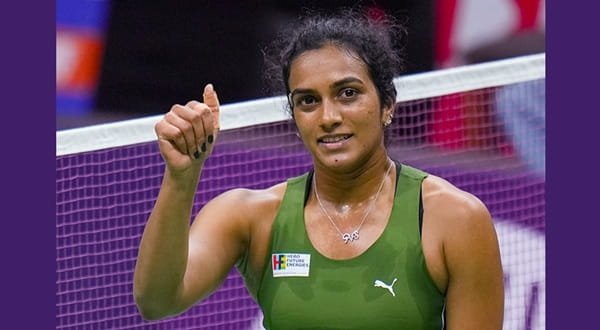
V. Sindhu remains India’s most decorated badminton Olympian. She won silver at Rio 2016 and bronze at Tokyo 2020, then added the 2019 World Championships gold to an exceptional major-event record. Her game combines reach, steep attacking strokes and strong court coverage. In 2026, she remained central to India’s women’s singles squad and reached the Asian Games quarterfinals. Sindhu’s sustained visibility has also made badminton a mainstream sporting attraction for Indian audiences.
Key highlights:
- Olympic silver in 2016 and bronze in 2020.
- BWF World Champion in 2019.
- Commonwealth Games singles champion in 2022.
2. Satwiksairaj Rankireddy and Chirag Shetty
Satwiksairaj Rankireddy and Chirag Shetty turned Indian men’s doubles into a genuine world-level force. Satwik supplies explosive rear-court power, while Chirag excels in interceptions, flat exchanges and front-court pressure. They were pivotal to India’s first Thomas Cup title in 2022 and later became Asian Games champions. Their 2026 season included Singapore Open and China Masters Super 750 titles, reinforcing their place among India’s most important modern badminton combinations.
Key highlights:
- Key members of the 2022 Thomas Cup-winning team.
- Asian Games men’s doubles champions.
- Singapore Open and China Masters winners in 2026.
3. Lakshya Sen
Lakshya Sen represents modern Indian men’s singles. His strengths include retrieval, rapid changes of direction, counterattacking and the patience to extend rallies. Sen won bronze at the 2021 World Championships, finished runner-up at the 2022 All England and took Commonwealth Games gold that year. He finished fourth at the Paris 2024 Olympics, India’s best Olympic men’s singles result. In 2026, he remained a key team player, helping India reach the Asian Games team semifinals.
Key highlights:
- 2021 World Championships bronze medallist.
- 2022 All England runner-up.
- Fourth in men’s singles at Paris 2024.
4. Saina Nehwal
Saina Nehwal changed the possibilities for Indian women’s badminton. She became the country’s first Olympic badminton medallist with bronze at London 2012 and rose to world No. 1 in 2015. Her game was built around stamina, disciplined rallies and forceful attacking play. She also won Commonwealth Games singles gold in 2010 and 2018. Nehwal confirmed her retirement in January 2026 after prolonged knee problems, closing a career that helped move badminton into India’s sporting mainstream.
Key highlights:
- India’s first Olympic badminton medallist.
- Former women’s singles world No. 1.
- Retired from competitive badminton in 2026.
5. Prakash Padukone
Prakash Padukone is a foundational figure in Indian badminton. In 1980, he became the first Indian to win the All England men’s singles title and reached world No. 1. His controlled style emphasized deception, placement, efficient movement and patient rally construction. Padukone proved that an Indian singles player could beat the world’s strongest opposition. After retirement, his academy and athlete-development work helped build a more professional training culture for later generations.
Key highlights:
- First Indian All England champion, in 1980.
- Reached world No. 1.
- Major influence on India’s professional badminton system.
6. Pullela Gopichand
Pullela Gopichand’s influence extends from championship player to transformational coach. He won the All England men’s singles title in 2001, becoming the second Indian after Prakash Padukone to achieve the feat. As a player, he combined patient construction, sharp net control and timely attack. After retirement, his Hyderabad academy became a major base for Indian shuttlers who later won Olympic and World Championship medals. His coaching legacy helped create a disciplined high-performance culture.
Key highlights:
- All England champion in 2001.
- One of India’s most influential badminton coaches.
- Built a system that developed multiple international champions.
7. Kidambi Srikanth
Kidambi Srikanth brought explosive attacking badminton to India’s men’s singles rise. His best game featured fast movement, jump smashes and early pressure that could rush even elite opponents. He reached world No. 1 in 2018 after a period of major international success. At the 2021 World Championships, Srikanth became the first Indian man to reach the singles final and won silver. He also contributed to India’s historic Thomas Cup victory in 2022.
Key highlights:
- Former world No. 1.
- 2021 World Championships silver medallist.
- Member of the 2022 Thomas Cup-winning team.
8. H. S. Prannoy
- S. Prannoy earned a reputation as one of India’s toughest big-match competitors. His heavy smashes, back-court pressure, endurance and tactical patience made him dangerous against higher-ranked opponents. Prannoy was crucial during India’s 2022 Thomas Cup run, repeatedly producing results under knockout pressure. In 2023, he won World Championships bronze and an Asian Games singles medal. His career stands out for persistence through injuries and stretches when rankings did not reflect his threat.
Key highlights:
- Crucial performer in the 2022 Thomas Cup triumph.
- 2023 World Championships bronze medallist.
- Known for major-event resilience and upset wins.
9. Treesa Jolly and Gayatri Gopichand
Treesa Jolly and Gayatri Gopichand have become the leading face of India’s women’s doubles revival. Treesa offers back-court power, while Gayatri contributes touch, anticipation and net craft. They made repeated deep All England runs and won Commonwealth Games bronze. Their biggest breakthrough arrived at the 2026 World Championships in New Delhi, where an unseeded run ended with bronze. The medal was especially significant for a country historically stronger in singles than women’s doubles.
Key highlights:
- 2026 World Championships bronze medallists.
- Commonwealth Games bronze medallists.
- India’s premier women’s doubles pair of their generation.
10. Unnati Hooda
Unnati Hooda is a bright symbol of India’s next badminton generation. At 14, she won the 2022 Odisha Open and became the youngest Indian to capture a BWF Super 100 title. Her strengths include persistence, court coverage and the ability to stay composed in long rallies. In 2026, she defeated world No. 6 Putri Kusuma Wardani on her way to the Asian Games quarterfinals, showing that she can trouble established international players.
Key highlights:
- Youngest Indian BWF Super 100 champion.
- 2026 Asian Games quarterfinalist.
- A leading long-term women’s singles prospect.
Conclusion
Indian badminton in 2026 reflects several generations of progress. Padukone and Gopichand established belief, Saina changed public expectations, Sindhu delivered historic global medals, and the Thomas Cup generation expanded India’s strength across men’s singles and doubles. Treesa-Gayatri and Unnati Hooda show the next wave is arriving. The challenge beyond 2026 will be consistency: converting promise into regular wins at Super 750 and Super 1000 events, World Championships and the Olympics. With stronger academies, deeper competition and more doubles success, India has the talent base to remain a major force in international badminton.