Lord Hanuman occupies a unique place in Sanatana Dharma. In the Ramayana, he is the fearless servant of Shri Rama, a master of wisdom, courage, humility and bhakti. The Mahabharata also remembers him through his encounter with Bhima and his presence on Arjuna’s banner. Across India, devotees worship him as Sankat Mochan, the remover of troubles, and as a protector who gives strength in difficult times.
Yet Hanuman worship is remarkably diverse. In Rajasthan he is revered as Balaji, in Tamil tradition as Anjaneyar, in Gujarat as Kashtabhanjan Dev, and elsewhere in Panchamukhi, child, standing or reclining forms. Some shrines are linked to the Ramayana landscape. Others grew around medieval saints and living pilgrimage traditions. The following ten temples stand out in 2026 for their history, legends, distinctive murtis and enduring spiritual importance.
1. Hanuman Garhi, Ayodhya, Uttar Pradesh
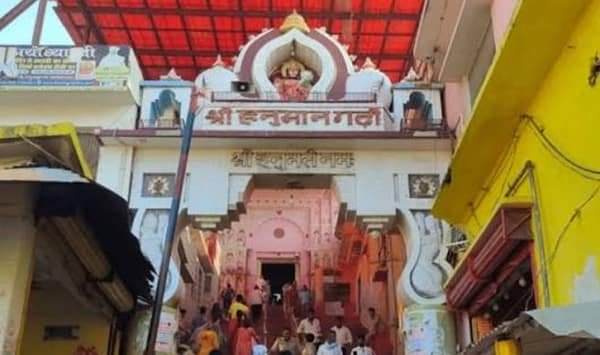
Among Ayodhya’s most important shrines, Hanuman Garhi rises like a four-sided fortress above the sacred city. The temple is traditionally associated with the 10th century, and local belief holds that Hanuman guarded Ramkot from this spot. Devotees climb 76 steps before entering the main shrine, where Bal Hanuman is shown in the lap of Mata Anjani. It is customary for many pilgrims to seek Hanuman’s blessings before visiting Shri Ram’s shrine. Ram Navami and Hanuman Jayanti bring especially large gatherings, reinforcing Hanuman Garhi’s identity as Ayodhya’s spiritual guardian.
2. Sankat Mochan Hanuman Temple, Varanasi, Uttar Pradesh
Varanasi’s Sankat Mochan Temple is inseparable from Goswami Tulsidas, the saint-poet of the Ramcharitmanas. The shrine dates to the early 16th century, and tradition says Tulsidas received a divine vision of Hanuman at this very place. The name Sankat Mochan means “reliever of troubles,” explaining the temple’s powerful devotional appeal. Hanuman’s murti faces Shri Rama, symbolizing unwavering bhakti. Devotees commonly offer besan laddoo, sindoor and prayers, with Tuesdays and Saturdays particularly important. The annual Sankat Mochan Sangeet Samaroh also connects classical Indian music with sacred service.
3. Salasar Balaji Temple, Churu, Rajasthan
Salasar Balaji is one of Rajasthan’s great Hanuman pilgrimage centres and a celebrated Swayambhu shrine in devotional tradition. Its most striking feature is the unusual Balaji murti with a clearly visible beard and moustache, a form rarely seen in Hanuman worship. The shrine is connected with an 18th-century legend in which the sacred image was discovered and eventually brought to Salasar. Chaitra Purnima, associated with Hanuman Janmotsav, and Sharad Purnima draw immense crowds. Devotees come for darshan, vows and thanksgiving offerings such as Savamani, making Salasar a living centre of North Indian Balaji devotion.
4. Jakhoo Temple, Shimla, Himachal Pradesh
High above Shimla, Jakhoo Temple stands on Jakhoo Hill at about 2,445 metres, the city’s highest point. Ramayana tradition connects the hill with Hanuman’s journey to the Himalayas in search of Sanjeevani Booti for the wounded Lakshmana. Believers say he paused here during that mission. Today the hilltop shrine combines pilgrimage with commanding Himalayan views, while a colossal 108-foot Hanuman statue has become one of Shimla’s defining landmarks. Devotees can climb from The Ridge or use the ropeway. Hanuman Jayanti and other auspicious days bring large numbers of worshippers to the summit.
5. Shri Kashtabhanjan Dev Hanuman Temple, Sarangpur, Gujarat
Sarangpur’s Kashtabhanjan Dev Temple occupies a special place in the Swaminarayan Sampraday. The Hanuman murti was consecrated by the revered saint Gopalanand Swami on Ashwin Vad Pancham, Vikram Samvat 1905, in the mid-19th century. “Kashtabhanjan” means the destroyer or crusher of suffering. Temple tradition associates the deity with protection from disturbing spiritual influences, and Saturdays are especially important for darshan. The shrine’s reputation has spread far beyond Gujarat, drawing pilgrims seeking courage, relief and spiritual reassurance. Its devotional character remains distinct from the larger Swaminarayan complexes also associated with Sarangpur.
6. Anjanadri Hill Temple, Hampi-Anegundi, Karnataka
Anjanadri Hill rises near Anegundi across the Tungabhadra from Hampi, in a landscape traditionally identified with Kishkindha of the Ramayana. Karnataka Tourism describes the hill as a place believed to be the birthplace of Hanuman, the son of Mata Anjana; hence the name Anjanadri and the southern devotional name Anjaneya. Pilgrims climb roughly 570 steps to reach the hilltop temple. The ascent opens dramatic views of boulder-strewn hills, paddy fields and the Tungabhadra valley. For devotees, however, the greater attraction is the sense of walking through a geography still alive with Ramayana memory.
7. Bade Hanuman Ji Temple, Prayagraj, Uttar Pradesh
Near the Triveni Sangam in Prayagraj stands one of India’s most unusual Hanuman shrines. Known as Bade Hanuman Ji, Lete Hanuman Ji or Fort Hanuman, it contains a remarkable 20-foot south-facing reclining idol located several feet below ground level. Local tradition links the posture with Hanuman resting near the Sangam after the Lanka campaign. The image contains additional sacred figures, including representations connected with Rama and Lakshmana. The temple is especially crowded during Magh Mela, Kumbh gatherings and major Hanuman observances. Its reclining form makes it instantly distinct from the standing murtis seen across India.
8. Prachin Hanuman Mandir, Connaught Place, New Delhi
Amid central Delhi’s commercial bustle, the Prachin Hanuman Mandir on Baba Kharak Singh Marg preserves a powerful tradition of antiquity. Devotional accounts regard it as one of the shrines connected with Pandava-era Indraprastha, while the present structure is associated with later rebuilding and renovation, including work in the early 18th century. The temple is famous for continuous chanting of “Sri Ram, Jai Ram, Jai Jai Ram” since 1 August 1964; temple histories and Indian travel sources describe the practice as Guinness-recognized. Tuesdays and Saturdays are especially busy, when the old shrine becomes a major devotional centre in the heart of modern Delhi.
9. Mehandipur Balaji Temple, Dausa, Rajasthan
Mehandipur Balaji is unlike almost any other Hanuman pilgrimage site in India. Set among the hills of Dausa district, the shrine is associated with a self-manifested form of Balaji and with longstanding traditions of spiritual cleansing and protection from negative influences. Ritual practices here are distinctive, and visitors may witness intense forms of prayer performed by families seeking relief from affliction. Devotees also make vows and thanksgiving offerings such as Savamani after a wish is believed to have been fulfilled. Tuesdays and Saturdays are particularly crowded. The temple’s fame rests less on architecture than on its powerful ritual identity.
10. Namakkal Anjaneyar Temple, Namakkal, Tamil Nadu
Namakkal Anjaneyar Temple represents the grandeur of southern Hanuman worship. Its celebrated 18-foot Anjaneyar image is a monumental single-stone figure that stands beneath the open sky, one of the most distinctive Hanuman murtis in India. The shrine’s legend is closely tied to Lord Narasimha and Goddess Lakshmi, whose sacred associations shape the religious landscape of Namakkal. The Anjaneyar deity faces the nearby rock-cut Narasimha shrine, creating a powerful Vaishnava relationship between servant and Lord. Worship follows the Sri Vaikhanasa tradition. Hanuman Jayanti and special abhishekam days draw devotees from across Tamil Nadu and neighbouring states.
Conclusion
These ten Hanuman temples reveal how one divine figure can unite many regions, languages and sacred traditions. Hanuman Garhi and Anjanadri evoke the living geography of the Ramayana. Sankat Mochan preserves the legacy of Tulsidas, while Sarangpur reflects the devotional history of the Swaminarayan tradition. Salasar, Mehandipur, Prayagraj, Delhi, Shimla and Namakkal each offer a form of worship shaped by local memory and ritual. Beyond 2026, their appeal remains timeless: devotees continue to seek Hanuman ji for courage, protection, discipline, humility and the spiritual strength to face life’s most difficult moments.