Date palm is one of the few fruit crops that can turn extreme heat, dry air and even moderately saline conditions into a commercial advantage. In India, date cultivation is concentrated mainly in the arid and semi-arid belts of Gujarat and Rajasthan, with smaller pockets in Punjab, Haryana, Maharashtra and Tamil Nadu. Kachchh and western Rajasthan are especially important because their long, hot summers provide the heat units needed for fruit development.
What makes Indian date farming different from the Middle East is the monsoon. Many cultivars begin ripening just as rainfall and humidity rise, so Indian growers often harvest dates at the doka or khalal stage – when the fruits are fully coloured, crisp and sweet – rather than waiting for complete soft or dry ripening. This makes variety selection critical. Barhee excels as a fresh crisp date, Halawy and Khalas work for both fresh eating and soft-date processing, while Medjool is especially valued for dry dates in suitable hot-arid regions.
The 2026 picture is also becoming more interesting. ICAR-CIAH continues to evaluate a large national date-palm repository and has highlighted cultivars for fresh fruit, pind dates and dry dates. Tissue-culture planting material is also helping farmers establish true-to-type female orchards instead of depending on highly variable seedlings. For growers, maturity season, rain tolerance, fruit size, astringency, yield and end use matter far more than simply planting the most famous global name. Now, let’s check out the top 10 dates varieties in India!
1. Barhee
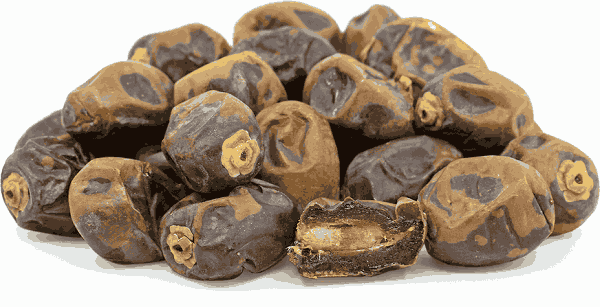
Barhee is the most important fresh-date cultivar for many Indian growers. Its biggest advantage is that the golden-yellow fruit becomes sweet and almost non-astringent while still firm and crisp, making it ideal for sale at the doka or khalal stage before monsoon damage becomes serious.
- Growing regions: Gujarat, Rajasthan and other hot-arid date belts; especially important in Kachchh.
- Maturity: Mid-season to late, generally reaching full doka later than early cultivars such as Halawy and Nagal.
- Fruit profile: Small to medium, round to ovate, golden-yellow fruit with crisp flesh.
- Quality: Kachchh evaluation recorded about 34.6°Brix and no astringency at khalal stage.
- Yield: ICAR-linked reviews report around 66 kg/palm at full doka under evaluated conditions; commercial yield varies with palm age and crop load.
- Best use: Premium fresh khalal dates, punnets, direct retail and pind-khajoor processing.
2. Medjool
Medjool is the premium large-fruited date recognised worldwide, but in India it needs the right climate to express its value. Western Rajasthan, particularly Barmer and other intensely hot locations, is better suited to taking Medjool further toward soft or dry maturity than humid areas.
- Growing regions: Rajasthan, especially Barmer, Bikaner and Jaisalmer; also planted in selected arid projects elsewhere.
- Maturity: Late, usually among the last cultivars to ripen.
- Fruit profile: Large, broad oblong-oval fruits with orange-yellow colour developing into brown at advanced maturity.
- Quality: Indian germplasm evaluation recorded fruit weight up to about 17 g, thick pulp and very high TSS at advanced maturity.
- Yield: ICAR work at Bikaner recorded about 35-38 kg/palm at doka under specified crop-load treatments.
- Best use: Premium soft dates, dry dates or chhuhara, gifting packs and high-value retail.
3. Halawy
Halawy is one of the safest choices where growers want an early harvest and strong fresh-eating quality. It ripens well before Barhee and is also recognised in India for soft-date processing, giving farmers more than one marketing option.
- Growing regions: Rajasthan, Gujarat and Punjab.
- Maturity: Early; Bikaner studies recorded full doka in early July and sometimes earlier depending on season.
- Fruit profile: Small to medium, oblong fruits with rounded tips and yellow to light-orange colour.
- Quality: Sweet at the fresh stage; Indian date-palm literature reports TSS around 30-34% depending on location and maturity.
- Yield: Historical Indian evaluations have reported roughly 60-125 kg/palm depending on age, orchard and crop management.
- Best use: Fresh doka dates, soft dates, pind dates and processed products including chhuhara.
4. Khuneizi
Khuneizi, often written Khunezi or Khuneize, is especially attractive because it develops a reddish to purplish colour rather than the more common yellow of Barhee or Halawy. It also performs strongly for soluble solids and pulp-to-stone ratio in Indian evaluations.
- Growing regions: Rajasthan and Kachchh, Gujarat; planted commercially in several Rajasthan districts.
- Maturity: Early to mid-season, generally reaching doka before Barhee.
- Fruit profile: Elongated red to grey-purple fruit with attractive colour at khalal stage.
- Quality: Kachchh evaluation recorded around 42.75°Brix and a very high pulp-to-stone ratio.
- Fruit size: Indian studies recorded around 10-11 g fruit weight at doka to pind stages.
- Best use: Fresh coloured dates, premium retail packs, soft-date processing and mixed-variety orchards aimed at visual diversity.
5. Khalas
Khalas combines attractive yellow fruit, good sweetness and relatively large fruit size under Indian conditions. It is widely planted in Rajasthan projects and has also performed well in Kachchh varietal evaluation.
- Growing regions: Rajasthan, Gujarat and other hot-arid production zones.
- Maturity: Mid-season, generally reaching full doka in July.
- Fruit profile: Small to medium, oblong-oval yellow fruit with an oblique base and irregular outline.
- Quality: Kachchh evaluation recorded about 33.9°Brix and one of the highest pulp-to-stone ratios among tested cultivars.
- Fruit size: About 12.3 g at khalal stage in one Kachchh evaluation, heavier than Barhee and Halawy in the same study.
- Best use: Fresh eating, soft-date processing, premium yellow-date packs and value-added products.
6. Dhamas
Dhamas is one of the most exciting Indian selections for the 2026 date-palm discussion because its key trait is earliness. ICAR-CIAH has highlighted it for pind-date production before the monsoon, helping solve one of India’s biggest date-growing problems.
- Research status: Elite early-ripening genotype evaluated by ICAR-CIAH under hot-arid conditions.
- Maturity: Very early; transitions from doka to dang by the third week of June and can reach pind stage by late June or early July.
- Fruit profile: Attractive fruits around 10-12 g with length of about 4.2 cm in recent research reporting.
- Climate advantage: Its early ripening can help fruit escape monsoon rain and humidity.
- Commercial value: Specifically identified by ICAR-CIAH as promising for soft or pind-date production.
- Best use: Early pind dates, premium pre-monsoon markets and orchards where rainfall at normal date maturity is a major risk.
7. Zahidi
Zahidi is a prolific mid-season date with a harder, smoother fruit surface than many soft-date cultivars. That feature gives it useful tolerance to rain and humidity and makes it an important processing and storage-oriented option.
- Growing regions: Rajasthan, Gujarat and Punjab in Indian varietal recommendations.
- Maturity: Mid-season.
- Fruit profile: Small to medium, ovate yellow fruits that are astringent at doka stage.
- Crop strength: Slightly tolerant to rain and high humidity because of its smooth, relatively hard fruit surface.
- Yield: Older Indian summaries report yields around 125 kg/palm under favourable conditions; performance varies substantially by orchard.
- Best use: Soft dates after further ripening, processing, beverages and orchards needing somewhat better rain tolerance.
8. Shamran (Sayer)
Shamran, also known as Sayer in commercial literature, is a versatile mid-season cultivar. It can move beyond the fresh stage into soft or drier products, making it useful where growers have access to processing rather than relying only on fresh khalal sales.
- Growing regions: Rajasthan, Gujarat and Punjab.
- Maturity: Mid-season, usually during July.
- Fruit profile: Medium to large, oblong-oval fruit; yellow at doka with faint reddish streaking near the base.
- Quality: Indian date-palm summaries report TSS around 41% at suitable maturity.
- Humidity response: Described as slightly tolerant to relatively high humidity compared with very sensitive cultivars.
- Best use: Soft dates, dry-date products, beverages and processed date ingredients.
9. Khadrawy
Khadrawy is a comparatively compact mid-season cultivar that produces soft, sweet fruit after ripening. It is useful in orchards where farmers want a cultivar with a smaller palm habit and fruit suited to both soft-date and processing markets.
- Growing regions: Rajasthan, Gujarat and Punjab; also maintained in major date-palm research collections.
- Plant habit: Comparatively dwarf or compact relative to several tall cultivars.
- Maturity: Mid-season, slightly later than Halawy.
- Fruit profile: Small to medium, oblong-ovate fruit, greenish-yellow to light yellow at doka stage.
- Yield: Older Indian date-palm summaries place yield roughly around 40-80 kg/palm, depending on orchard and age.
- Best use: Soft dates, dry or semi-dry processed products, chutneys, beverages and mixed commercial orchards.
10. Nagal
Nagal is an important early cultivar in India’s date-palm germplasm and is particularly relevant where the goal is to move fruit toward dry-date production. Its early colour development gives growers a useful harvest window before many mid- and late-season varieties.
- Growing regions: Maintained and evaluated in Rajasthan date-palm research programmes.
- Maturity: Very early; Bikaner research recorded it as the earliest among several commercial cultivars to reach full doka.
- Fruit profile: Early-colouring fruit with a comparatively compact bunch structure.
- Research value: ICAR-CIAH has listed Nagal among cultivars suitable for dry-date use in arid regions.
- Current caution: Recent Rajasthan screening found Nagal highly susceptible to lesser date moth, so pest monitoring is important.
- Best use: Early harvest, dry-date or chhuhara production and diversified arid-region orchards with strong pest management.
Practical Farmer’s & Buyer’s Guide
- Match the cultivar to the product: Barhee is outstanding for crisp khalal fruit, Dhamas for early pind dates and Medjool or Nagal for dry-date production in suitable climates.
- Use true-to-type plants: Date palm is dioecious and seed-grown orchards are highly variable, with roughly half the seedlings expected to be male. Tissue-culture plants or authenticated offshoots are far better for commercial female orchards.
- Plan pollination: Commercial date palm requires managed pollination. A good female cultivar cannot produce a profitable crop without timely compatible pollen.
- Protect fruit from monsoon rain: Rain near ripening causes cracking, rot and fermentation. Earliness, bunch covering and fast marketing are crucial in Indian conditions.
- For buyers: Fresh khalal dates should be firm, fully coloured and free from astringency, bruising and fermentation. SDAU’s 2025 marketability work also emphasised sweetness, attractive red colour where applicable and consumer-friendly punnet or 1 kg packaging.
Conclusion
India’s date-palm industry is built around a very different market logic from many Middle Eastern countries. Because monsoon rain often arrives before full tamar maturity, cultivars that taste good at the fresh doka or khalal stage have a major advantage. Barhee leads that segment, Medjool serves premium soft and dry markets, Dhamas brings valuable earliness, while Halawy, Khuneizi, Khalas, Zahidi, Shamran, Khadrawy and Nagal give farmers a wider choice for fresh and processed products. In 2026, the best variety is the one that matches local heat, rainfall timing and the exact stage at which the fruit will be sold.
Frequently Asked Questions
Q. Which date variety is best for fresh eating in India?
Barhee is generally the strongest fresh khalal choice because its golden-yellow fruit becomes sweet with almost no astringency while still crisp. Halawy, Khuneizi and Khalas are also important fresh-eating cultivars in Indian arid regions.
Q. Which date variety is best for dry dates or chhuhara?
Medjool is one of India’s main research-backed choices for dry dates, especially in very hot western Rajasthan. ICAR-CIAH also identifies Nagal for dry-date use. Halawy can also be processed into quality chhuhara using controlled heat treatment and drying.
Q. Which date variety ripens earliest in India?
Nagal and Dhamas are among the earliest materials documented under Bikaner conditions. Dhamas is particularly notable because it can reach pind stage by late June or early July, helping it escape monsoon damage.
Q. Which date variety is best for Kachchh, Gujarat?
Barhee is the strongest proven commercial option for Kachchh. SDAU’s long-term germplasm evaluation specifically recommended Barhee for better fruit quality and economic returns, while Halawy, Khuneizi, Khalas and Zahidi are also important in the region.