Peas are one of India’s most important cool-season vegetables, valued for their sweet green seeds, quick crop cycle and strong winter demand. In this guide, “peas” refers to garden pea or vegetable pea (Pisum sativum), grown mainly for fresh green pods and shelled peas. This is different from field pea, which is primarily produced as a pulse or dry grain crop.
In 2026, variety choice has become much more specialised. Farmers can now choose extra-early lines for premium early-season prices, high-yielding main-season cultivars, powdery-mildew-resistant types, varieties suited to freezing and even edible-podded peas for urban and hospitality markets. ICAR-IIVR’s 2024 releases Kashi Purvi and Kashi Tripti bring newer genetics into the market, while Punjab-89, Pusa Pragati, Arkel and other established cultivars remain important because farmers already know their performance and market quality.
Pea is a cool-weather crop, and temperature strongly influences flowering, pod set and sweetness. Well-drained fertile loam with a slightly acidic to neutral reaction is ideal, while excessive heat at sowing can increase wilt and seedling losses. Now, let’s check out the top 10 peas varieties in India!
1. Kashi Tripti
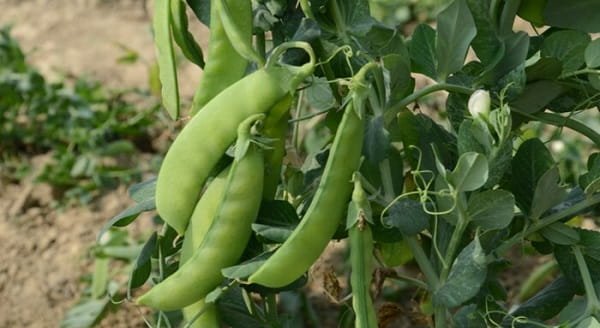
Kashi Tripti is one of the most interesting new pea releases for 2026 because the entire tender pod can be eaten. Developed by ICAR-IIVR and recommended in Uttar Pradesh in 2024, it targets premium retail, supermarkets, restaurants and health-conscious consumers rather than the conventional shelling-pea market alone.
- Origin: ICAR-Indian Institute of Vegetable Research, Varanasi.
- Type: Mid-season, edible-podded garden pea.
- Maturity: About 50–56 days to 50% flowering and 80–85 days to first tender-pod harvest.
- Pod profile: Crisp green pods without the tough parchment layer; about 12–15 pods per plant.
- Yield: Around 90–100 q/ha over 3–4 pickings.
- Quality: Whole-pod TSS around 11°Brix and fresh green seed TSS around 13.9°Brix.
- Disease strength: Resistant to powdery mildew.
- Best use: Premium fresh markets, salads, stir-fries and hospitality buyers.
2. Kashi Purvi
Kashi Purvi is a newer early-maturing IIVR pea released for Uttar Pradesh in 2024. Its short duration makes it especially useful in intensive vegetable rotations where farmers want to harvest peas early and move quickly to the next crop.
- Origin: ICAR-IIVR, Varanasi.
- Maturity: Around 35–40 days to 50% flowering and 65–70 days to green-pod harvest.
- Pod profile: About 8–8.5 cm long with 10–13 pods per plant.
- Shelling: Around 50–52%.
- Yield: Approximately 108–117 q/ha.
- Quality: Fresh seed TSS around 13.9°Brix and protein about 26.5% on a dry-weight basis.
- Crop advantage: Early harvest helps the crop escape later powdery mildew and rust pressure.
- Best use: Multiple-cropping systems and early fresh-green-pea markets.
3. Punjab-89
Punjab-89 is one of India’s strongest main-season green-pea varieties. It is especially known for very sweet shelled peas, attractive dark-green pods and high green-pod yield.
- Origin: Punjab Agricultural University.
- Plant type: Medium-dwarf and vigorous.
- Pod load: Around 28–30 well-filled pods per plant, usually borne in doubles.
- Pod quality: Long, dark-green pods carrying about 9–10 grains.
- Maturity: First picking in roughly 85–90 days.
- Shelling: More than 55%.
- Yield: About 60 q/acre, equivalent to roughly 14.8 t/ha.
- Commercial use: Fresh shelling and freezing; PAU specifically lists Punjab-89 as suitable for frozen peas.
4. Kashi Nandini
Kashi Nandini remains one of IIVR’s most important early garden peas and continues to have commercial relevance in 2026. ICAR transferred licensing for the variety again in May 2026, underlining its continued seed-market importance.
- Origin: ICAR-IIVR, Varanasi.
- Plant habit: Compact plants around 47–51 cm tall.
- Flowering: First flowers appear around 32 days after sowing.
- Pod profile: Attractive 8–9 cm pods with about 8–9 seeds.
- Shelling: Roughly 47–48%.
- Yield: Around 110–120 q/ha.
- Regional adaptation: Recommended across several northern, eastern and southern states.
- Crop strength: Tolerant to leaf miner and pod borer in IIVR descriptions.
5. Kashi Mukti
Kashi Mukti is a particularly useful variety where powdery mildew regularly damages late pea crops. It combines early maturity with attractive pods and soft, bold seeds.
- Origin: ICAR-IIVR, Varanasi.
- Plant habit: About 50–53 cm tall with light-green foliage.
- Pod profile: Around 8.5–9 cm long with 8–9 bold, soft-textured seeds.
- Shelling: Approximately 48–49%.
- Yield: Around 110–120 q/ha in current IIVR varietal information.
- Disease strength: Resistant to powdery mildew.
- Recommended area: Uttar Pradesh in its official state release.
- Best use: Farms where disease pressure increases as the winter season advances.
6. Pusa Shree
Pusa Shree is an extra-early garden pea from ICAR-IARI developed for farmers who want to enter the market before the main-season crop arrives. Its resistance to Fusarium wilt adds particular value to early sowing.
- Origin: ICAR-Indian Agricultural Research Institute, New Delhi.
- Maturity: Pods are ready in about 50–55 days.
- Pod profile: Dark-green pods carrying around 6–7 seeds.
- Yield: About 5.0–5.2 t/ha under IARI recommendations.
- Disease strength: Resistant to Fusarium wilt.
- Sowing advantage: Suitable for late-September to early-October sowing in the North Indian plains.
- Best use: Extra-early production aimed at high early-season prices.
7. AP-3
AP-3 is a modern early variety recommended by Punjab Agricultural University. It was developed from Azad P-1 × Arkel and combines early harvest with bold seed and good shelling percentage.
- Parentage: Azad P-1 × Arkel.
- Plant type: Dwarf and upright.
- Pod profile: Medium pods around 8.85 cm, usually single or double.
- Seeds: About 7–8 bold grains per pod.
- Shelling: Around 50%.
- Maturity: First picking in approximately 60–65 days when sown at the recommended October window.
- Yield: About 31.5 q/acre, equivalent to roughly 7.8 t/ha.
- Best use: Early commercial production in Punjab-type plains conditions.
8. Pusa Pragati
Pusa Pragati is one of IARI’s dependable early garden-pea cultivars and remains widely used in demonstrations and seed programmes. Farmers value its long pods, bold seeds and relatively short crop duration.
- Origin: ICAR-IARI, New Delhi.
- Maturity group:
- Pod profile: Long green pods; comparative evaluations have recorded pod length close to 9.5–10 cm.
- Fresh-market quality: Bold green peas and attractive pod appearance.
- Field performance: IARI demonstrations have reported about 5.5–7.6 t/ha under different locations.
- Commercial advantage: Often out-yields local cultivars while maintaining better pod quality.
- Best use: Early winter fresh-pea production and kitchen-to-market vegetable systems.
9. Arka Ajit
Arka Ajit is a strong mid-season pea from ICAR-IIHR, Bengaluru. It is especially valuable for disease-prone areas because it combines sweet seeds with resistance to both powdery mildew and rust.
- Origin: ICAR-Indian Institute of Horticultural Research.
- Maturity group: Mid-season.
- Pod profile: Medium-long, light-green pods about 8 cm long.
- Seeds: Around eight bold, sweet, green seeds per pod.
- Shelling: About 55%.
- Maturity: Pods mature in roughly 65 days; total crop duration around 90 days.
- Yield: About 10 t/ha.
- Disease strength: Resistant to powdery mildew and rust.
- Regional fit: Recommended for Uttar Pradesh, Rajasthan and Karnataka.
10. Arkel
Arkel is one of India’s classic early green-pea varieties and remains popular because of its short duration and attractive dark-green pods. It is especially useful when growers want to reach the fresh market before slower main-season cultivars.
- Maturity: Around 60–65 days from sowing to marketable green-pod stage.
- Plant habit: Dwarf, generally 30–45 cm tall.
- Pod profile: Attractive dark-green, well-filled pods about 8–10 cm long.
- Seeds: Usually 7–8 dark-green grains per pod.
- Shelling: Around 40%.
- Yield: About 18–20 q/acre, roughly 4.4–4.9 t/ha.
- Processing use: PAU notes that Arkel is suitable for dehydration.
- Best use: Very early fresh markets and short-duration vegetable rotations.
Practical Buyer’s & Farmer’s Guide
- Choose by market window: Pusa Shree, AP-3, Arkel and Kashi Purvi are useful for early sales, while Punjab-89 is better for the main season.
- For disease-prone fields: Kashi Mukti, Arka Ajit and Kashi Tripti offer documented powdery-mildew resistance, while Pusa Shree adds Fusarium-wilt resistance.
- For processing: Punjab-89 is suitable for freezing, while Arkel has traditionally been recommended for dehydration.
- Harvest tender pods: Pods should be fully developed but still green and tender. Delayed picking makes peas starchy and reduces sweetness.
- Use genuine seed: Purchase from ICAR institutes, agricultural universities, KVK-linked agencies or authorised seed suppliers and match the variety to the recommended sowing window.
Conclusion
India’s garden-pea options in 2026 range from extra-early Pusa Shree and Arkel to high-yielding Punjab-89 and disease-resistant Kashi and Arka lines. Newer cultivars such as Kashi Purvi and edible-podded Kashi Tripti also show how breeding is moving toward shorter rotations, premium markets and better disease resistance. The best choice is the variety that matches sowing time, disease pressure and the market in which the pods will be sold.
Frequently Asked Questions
Q. Which pea variety gives the highest yield in this list?
Punjab-89 has a PAU-recorded green-pod yield of around 60 q/acre, roughly 14.8 t/ha. Among IIVR varieties, Kashi Nandini and Kashi Mukti produce around 11–12 t/ha, while Kashi Purvi reaches about 10.8–11.7 t/ha.
Q. Which pea variety is best for early harvesting?
Pusa Shree is one of the earliest, with pods ready in about 50–55 days. Arkel and AP-3 generally reach first picking in around 60–65 days, while Kashi Purvi is ready in roughly 65–70 days.
Q. Which pea variety is resistant to powdery mildew?
Kashi Mukti, Kashi Tripti and Arka Ajit have documented powdery-mildew resistance. Arka Ajit is also resistant to rust, making it useful where both diseases are problematic.
Q. Which pea variety is best for freezing?
Punjab-89 is a strong processing choice because PAU specifically lists it as suitable for freezing. Its peas are very sweet, shelling exceeds 55%, and pods contain about 9–10 grains.