Pear is one of the few fruit crops in India that stretches successfully from the subtropical plains to the cool Himalayan hills. In Punjab and adjoining lower-hill regions, low-chill pears such as Patharnakh, Punjab Nakh and Punjab Beauty can perform with roughly 200–300 chilling hours. In higher parts of Himachal Pradesh, Uttarakhand and Jammu & Kashmir, soft European pears need far colder winters, often around 900–1,000 chilling hours.
That climatic divide is what makes pear variety selection so important in 2026. A hard pear may travel well and tolerate rough marketing, while a soft pear can offer a melting texture and premium dessert quality but usually needs better post-harvest handling. PAU’s current recommendations divide pears into hard, semi-soft and soft groups, giving farmers practical choices for fresh markets, processing and cold storage.
For buyers, the best pear is not always the softest one. Hard pears such as Patharnakh are excellent for transport and storage, semi-soft cultivars offer a balance of sweetness and firmness, and soft pears such as Nijisseiki or Bartlett are aimed more at premium eating quality. Now, let’s check out the top 10 pear varieties in India!
1. Punjab Nakh
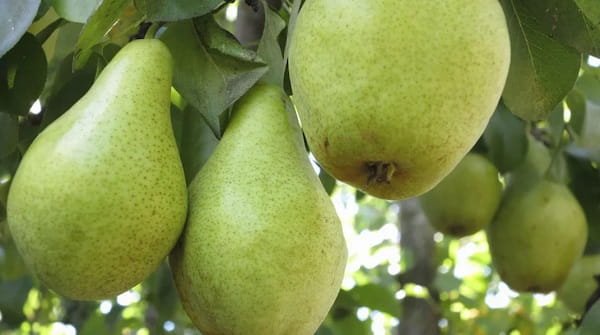
Punjab Nakh is one of the strongest low-chill hard pears for North Indian subtropical conditions. Selected from Patharnakh by Punjab Agricultural University, it combines heavy bearing with crisp fruit and dependable keeping quality.
- Origin: Punjab Agricultural University; released in 2008.
- Tree habit: Spreading and vigorous.
- Fruit profile: Ovate, light yellowish-green fruit with prominent dots; average weight about 155 g.
- Flesh: Gritty, crisp and juicy.
- Harvest: Fourth week of July under Punjab conditions.
- Yield: Around 190 kg per mature tree.
- Storage: Can be cold-stored for about 60 days at 0–1°C under high relative humidity.
2. Patharnakh
Patharnakh is one of India’s classic hard pears and remains a benchmark for commercial orchards in Punjab and the lower northern plains. Its great strength is durability: the fruit can withstand transport better than many soft dessert pears.
- Growing belt: Punjab and other low-chill subtropical areas; also known as sand pear in broader horticultural literature.
- Tree habit: Spreading and vigorous.
- Fruit profile: Medium, round, green fruit with prominent dots.
- Flesh: Gritty, crisp and juicy.
- Harvest: Last week of July.
- Yield: About 150 kg per tree.
- Commercial strength: Good keeping quality and excellent ability to withstand long-distance transportation.
3. Punjab Beauty
Punjab Beauty is a semi-soft pear developed for consumers who want sweeter, juicier fruit than traditional hard pears without moving completely into high-chill European types. Its yellow skin with a red blush also gives it stronger visual appeal.
- Origin: Punjab Agricultural University; released in 1999.
- Tree habit: Upright, medium in vigour and regular in bearing.
- Fruit profile: Medium-sized yellow fruit with an attractive red blush.
- Quality: White flesh, around 14% TSS and about 0.3% acidity.
- Harvest: Third week of July.
- Yield: Around 80 kg per tree.
- Storage: Can be held for about 60 days under recommended cold-storage conditions.
4. Punjab Nectar
Punjab Nectar is one of PAU’s best balanced semi-soft pears for both eating and processing. It is precocious, very juicy and less gritty when mature than a hard pear such as Patharnakh.
- Origin: Punjab Agricultural University; released in 2004.
- Tree habit: Upright, medium in vigour and precocious.
- Fruit profile: Medium to large yellow-green fruit averaging about 138 g.
- Quality: White flesh, around 13.6% TSS and 0.21% acidity.
- Harvest: Fourth week of July.
- Yield: Around 80 kg per tree.
- Commercial use: Suitable for table consumption as well as nectar, RTS drinks and squash processing.
5. Punjab Gold
Punjab Gold is a large-fruited semi-soft pear that stands out for its golden-yellow skin. Its lower grittiness at maturity makes it more pleasant for fresh eating than traditional hard pears, while processors also value its balanced flavour.
- Origin: Punjab Agricultural University; released in 2004.
- Tree habit: Upright and medium in vigour.
- Fruit profile: Large golden-yellow fruit averaging about 166 g.
- Flesh: White, less gritty and mellow when ripe.
- Quality: Around 13.3% TSS and 0.22% acidity.
- Harvest: End of July.
- Yield: About 80 kg per tree.
- Commercial use: Table fruit, ready-to-serve beverages, nectar and squash.
6. Nijisseiki
Nijisseiki, also known internationally as Twentieth Century pear, is a soft Asian pear currently recommended by PAU. Unlike the elongated European pear shape, it produces rounder fruit with a very juicy, soft eating texture.
- Type: Soft Asian pear.
- Tree habit: Spreading and medium in vigour.
- Fruit profile: Medium-sized fruit with golden-brown ground colour and whitish flesh.
- Quality: Around 12.9% TSS, 0.21% acidity and approximately 74.6% juice.
- Harvest: End of June to the first week of July.
- Yield: Around 80.2 kg per tree.
- Commercial use: Fresh eating and processing into RTS drinks, nectar and squash; fruits can store for roughly four weeks under recommended cold conditions.
7. Punjab Soft
Punjab Soft lives up to its name: it is one of PAU’s juiciest and softest pear cultivars. It is especially useful where the market prefers tender fruit or where processors want a soft raw material for beverage products.
- Origin: Punjab Agricultural University; released in 2007.
- Tree habit: Upright, spreading and medium in vigour.
- Fruit profile: Medium fruit with yellow-green ground colour.
- Flesh: White, very juicy and soft when mature.
- Quality: Around 11.3% TSS with low acidity of about 0.135%.
- Harvest: First week of July.
- Yield: Around 85 kg per tree.
- Commercial use: Particularly suitable for processing; storage can be extended under carefully managed cold conditions.
8. Baggugosha
Baggugosha is a traditional pear that still has a recognised place in Punjab horticulture. It matures later than many of PAU’s newer semi-soft and soft cultivars and is valued for sweetness, transportability and a familiar market identity.
- Tree habit: Upright and vigorous.
- Fruit profile: Greenish-yellow fruit tapering towards the stem end.
- Flesh: White to cream-coloured, sweet and moderately gritty.
- Harvest: First week of August.
- Yield: Around 60 kg per tree.
- Transport quality: Stands handling and transportation comparatively well.
- Best use: Fresh markets where a traditional pear with firmer flesh is preferred.
9. Williams Bartlett
Williams Bartlett, commonly called Bartlett, is one of the world’s great dessert and processing pears and remains recommended for India’s temperate pear zones. It is particularly relevant to Jammu & Kashmir and higher Himalayan orchards where the winter chill is sufficient.
- Indian suitability: Recommended by NHB for temperate areas including Jammu & Kashmir and high-hill regions.
- Fruit profile: Classic pyriform fruit that changes from pale green to yellow as it ripens.
- Flesh: Fine-grained, soft, melting, sweet and aromatic.
- Harvest quality: SKUAST Kashmir recommends harvesting for direct marketing at the yellowish-green stage, around 14–15% TSS and 0.20–0.25% acidity.
- Commercial use: Premium fresh eating, canning and processed pear products.
- Climate note: Requires a colder winter than Punjab’s low-chill cultivars and should not be planted in warm plains merely because Bartlett fruit commands a premium.
10. Kieffer
Kieffer is a hardy pear with Asian and European ancestry and is specifically listed by the National Horticulture Board among low-chill pears suitable for India’s mid- and lower-hill or valley regions. It is more valued for toughness and processing than for the melting texture of Bartlett.
- Indian suitability: Recommended for mid/low hills and valley regions; classified by NHB among low-chill pear options.
- Tree habit: Vigorous and generally heavy bearing.
- Fruit profile: Large golden-yellow fruit, often with some blush.
- Flesh: White, crisp and comparatively coarse.
- Climate advantage: More adaptable to warmer conditions than high-chill European dessert pears.
- Commercial use: Preserves, canning and cooking, as well as fresh use when properly ripened.
- Farmer advantage: Useful where orchard hardiness and dependable production matter more than ultra-soft dessert texture.
Practical Buyer’s & Grower’s Guide
- Match chilling requirement first: Low-chill Punjab pears and high-chill Himalayan pears are not interchangeable. PAU notes that subtropical pears may need roughly 200–300 chilling hours, while soft high-hill types can require about 900–1,000 hours.
- Choose the right eating texture: Patharnakh and Punjab Nakh stay crisp and gritty; Punjab Beauty and Nectar are semi-soft; Bartlett and Punjab Soft are much softer when properly ripened.
- For storage and transport: Patharnakh and Punjab Nakh are among the strongest options, while soft dessert pears need gentler handling.
- For processing: Punjab Nectar, Punjab Gold and Punjab Soft are officially suitable for RTS drinks, nectar and squash. Bartlett and Kieffer are also established processing pears.
- Buy grafted plants: Use true-to-type nursery plants on suitable rootstocks. PAU currently recommends Kainth as a pear rootstock under Punjab conditions.
Conclusion
India’s pear sector is unusually diverse because it spans both subtropical plains and cold Himalayan orchards. Punjab Nakh and Patharnakh lead for hard, transport-friendly fruit, Punjab Beauty, Nectar and Gold provide semi-soft quality, while Nijisseiki, Punjab Soft and Bartlett serve the softer premium segment. In 2026, the smartest choice is the pear variety that matches local winter chill, market distance and the texture consumers actually want.
Frequently Asked Questions
Q. Which pear variety gives the highest yield in this list?
Punjab Nakh has the highest documented PAU yield among the varieties listed here at around 190 kg per mature tree. Patharnakh follows at about 150 kg per tree. Actual orchard yield depends on tree age, spacing, climate, crop load and management.
Q. Which pear is best for hot or low-chill regions in India?
Punjab Nakh, Patharnakh, Punjab Beauty, Punjab Nectar and Punjab Gold are strong low-chill choices for subtropical North Indian conditions. Kieffer is another low-chill option recognised by NHB for lower hills and valley regions.
Q. Which pear variety is the softest and juiciest?
Punjab Soft is specifically described by PAU as very soft and very juicy. Nijisseiki is also extremely juicy, while Williams Bartlett develops a soft, melting texture when properly ripened.
Q. Which pear variety is best for storage and long-distance transport?
Patharnakh is especially well known for keeping quality and its ability to withstand transportation. Punjab Nakh also has good keeping quality and can be cold-stored for around 60 days under recommended conditions.