Few crops are as deeply woven into Indian food and farm life as coconut. Tender nuts are sold as a cooling drink, fresh kernel goes into chutneys and sweets, coconut milk enriches curries, and dried copra supplies edible oil. The husk becomes coir, the shell goes into handicrafts and fuel, and even the inflorescence can be tapped for neera. Known as nariyal in Hindi, thengai in Tamil, thenga in Malayalam and kobbari in Telugu and Kannada, coconut is both a kitchen staple and a long-lived plantation crop.
By 2026, growers have far more choice than simply planting any local tall palm. ICAR-CPCRI now offers specialised dwarfs for tender nuts, tall varieties for copra and oil, root-wilt-tolerant material for disease hotspots, and hybrids that combine early bearing with high nut yield. Newer names such as Kalpa Suvarna, Kalpa Ratna and Kalpa Vajra sit beside classic West Coast Tall and Chowghat Orange Dwarf. The right choice depends on climate, irrigation, disease pressure and whether the farm targets tender nuts, copra, oil or neera. So, let’s check out the top 10 coconut varieties in India!
1. West Coast Tall (WCT)
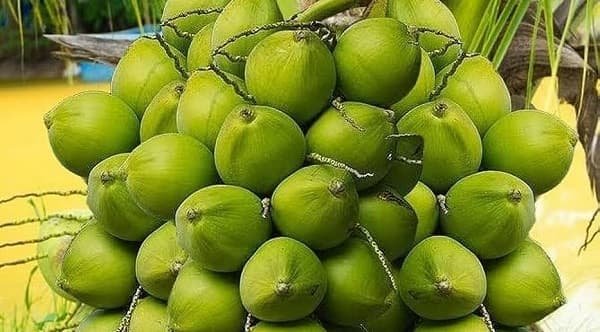
West Coast Tall is the classic coconut of India’s western coastal belt and remains one of the country’s most dependable plantation types. Its long productive life, good copra recovery and broad soil adaptation keep it relevant even as newer hybrids expand.
- Regional belts: Kerala, Karnataka, Tamil Nadu, Gujarat and other coconut-growing regions.
- Bearing & yield: Starts in about 6-7 years and averages around 80 nuts per palm per year.
- Copra & oil: About 176 g copra per nut with roughly 68% oil.
- Best fit: Copra, edible oil and long-term plantations where durability and broad adaptation matter.
2. East Coast Tall (ECT)
East Coast Tall is the traditional tall cultivar for India’s eastern and south-eastern coconut belt. It is a locally proven choice for coastal farms that prefer a hardy tall palm over a high-input hybrid.
- Regional belts: Tamil Nadu, Andhra Pradesh, Odisha, West Bengal, Puducherry and adjoining coastal regions.
- Bearing & yield: Usually begins in 6-8 years and averages around 70 nuts per palm annually.
- Copra & oil: About 125 g copra per nut with roughly 64% oil.
- Best fit: Traditional coastal farming, copra and household coconut use.
3. Chowghat Orange Dwarf (COD)
Chowghat Orange Dwarf is India’s best-known tender-coconut dwarf. Its compact habit, early bearing and bright orange nuts make it useful for drinking water, home gardens and hybrid seed production.
- Regional belts: Recommended widely, with major use in Kerala, Karnataka and Tamil Nadu.
- Bearing & yield: Flowers in about 3-4 years; CPCRI reports roughly 112-192 nuts per palm under irrigation and good care.
- Tender nut profile: Around 350 ml water per nut with strong visual appeal from the orange fruit colour.
- Best fit: Tender coconut markets and farms with reliable irrigation.
4. Kalpa Suvarna
Kalpa Suvarna is one of the most important newer coconut varieties for 2026. This ICAR-CPCRI dwarf is dual purpose, giving farmers attractive tender nuts as well as useful copra.
- Recommended belt: Kerala and Karnataka.
- Bearing & yield: Flowers in about 30-36 months and yields around 108-130 nuts per palm annually.
- Tender nut & copra: About 431 ml water and around 186 g copra per nut.
- Special value: Tender water is about 5.8°Brix; oil content is roughly 64.5%.
5. Kalpa Shatabdi
Kalpa Shatabdi is a high-yielding tall coconut for growers who want large nuts and exceptional tender-water volume. Its heavy copra content also makes it a strong dual-purpose choice.
- Recommended belt: Kerala, Karnataka and Tamil Nadu.
- Bearing & yield: Begins flowering in about seven years and yields around 105-168 nuts per palm.
- Tender nut & copra: About 612 ml tender water and around 273 g copra per nut.
- Best fit: Large-nut tender markets and copra-focused plantations.
6. Kalpa Ratna
Kalpa Ratna is a genuinely multi-purpose coconut. It combines high nut yield with moisture-deficit tolerance and can serve tender-nut, copra and neera markets from the same plantation.
- Recommended belt: Kerala, Tamil Nadu and Karnataka.
- Bearing & yield: Flowers in about 5-6 years and yields roughly 148-187 nuts per palm.
- Product profile: About 500 ml tender water, 184 g copra per nut and around 64% oil.
- Special value: Inflorescence sap yield is about 31 litres per inflorescence, useful for neera diversification.
7. Kalpa Vajra
Kalpa Vajra was developed for one of coconut farming’s toughest regional problems: root-wilt disease. It comes from healthy high-yielding West Coast Tall material selected in disease hotspots.
- Recommended belt: Root-wilt-affected tracts, especially Kerala.
- Bearing & yield: Flowers in about 4-5 years and averages around 80-94 nuts per palm in affected areas.
- Nut quality: Around 370 ml tender water, 216 g copra and about 68% oil.
- Best fit: Disease-prone farms where stable production matters more than maximum theoretical yield.
8. Kalpa Pratibha
Kalpa Pratibha is a high-yielding tall variety for farmers who want large nuts, good copra recovery and dependable performance. Its relative tolerance to moisture deficit adds value where rainfall is less reliable.
- Recommended belt: Kerala, Tamil Nadu, Andhra Pradesh and Maharashtra.
- Bearing & yield: Flowers in about six years and yields around 98-131 nuts per palm.
- Tender nut & copra: Around 400 ml tender water and about 256 g copra per nut.
- Oil & use: About 67% oil; useful for copra, oil and tender coconut.
9. Chandra Sankara (COD x WCT)
Chandra Sankara is a classic dwarf x tall hybrid combining early bearing from Chowghat Orange Dwarf with the productive background of West Coast Tall. It remains one of India’s best-known examples of coconut hybrid vigour.
- Regional belts: Kerala, Karnataka and Tamil Nadu under good management.
- Bearing & yield: Can flower around three years after planting and yield about 110-210 nuts per palm.
- Copra & oil: Roughly 208-225 g copra per nut with about 66% oil.
- Best fit: High-input farms wanting early bearing, high nut numbers and dual-purpose production.
10. Kalpa Sreshta (MYD x Tiptur Tall)
Kalpa Sreshta is one of ICAR-CPCRI’s highest-yielding modern coconut hybrids. The Malayan Yellow Dwarf x Tiptur Tall cross produces an early-bearing palm with exceptionally strong nut and copra output.
- Recommended belt: Kerala and Karnataka.
- Bearing & yield: Flowers in about four years and averages around 167-186 nuts per palm.
- Copra & tender nut: About 216 g copra per nut and around 368 ml tender water.
- Commercial strength: Estimated copra output is about 35.9 kg per palm per year.
Practical Farmer’s Guide: How to Choose a Coconut Variety
- Decide the market first: Dwarfs suit tender nuts, while many tall and hybrid types provide stronger copra and oil output.
- Check irrigation: High-yielding dwarfs and hybrids express their potential best with good water and nutrition.
- Match disease risk: In root-wilt areas, varieties such as Kalpa Vajra and other disease-tolerant CPCRI material are safer.
- Buy genuine seedlings: Coconut is a long-lived crop, so use ICAR, university, government or reliable licensed nursery planting material.
- Plan for bearing age: Dwarfs and hybrids may start in 3-4 years, while many tall varieties take 5-7 years.
Conclusion
India’s coconut choices now range from dependable West Coast Tall and East Coast Tall to tender-nut dwarfs and high-output CPCRI hybrids. Kalpa Suvarna and Kalpa Shatabdi expand dual-purpose options, Kalpa Ratna adds neera potential, and Kalpa Vajra addresses root-wilt risk. The best palm is the one matched to climate, water, disease pressure and the market the farmer wants to serve.
Frequently Asked Questions
Q. Which coconut variety is best for tender coconut water?
Chowghat Orange Dwarf is a classic tender-nut choice. Kalpa Suvarna is an excellent newer dwarf, while Kalpa Shatabdi can provide around 612 ml tender water per nut.
Q. Which coconut variety gives the highest yield in this list?
Under good management, Chandra Sankara can reach about 110-210 nuts per palm annually. Kalpa Sreshta is also exceptionally productive at roughly 167-186 nuts per palm.
Q. Which coconut variety is suitable for root-wilt areas?
Kalpa Vajra is specifically developed and recommended for root-wilt-affected tracts. Kalpasree and Kalpa Sankara are other CPCRI options for disease-prone areas.
Q. Which new coconut variety is especially relevant in 2026?
Kalpa Suvarna is particularly notable because it is a newer ICAR-CPCRI dwarf highlighted in current 2026 horticulture material. It combines early bearing, good tender-water volume and useful copra production.