Basketball in India has moved through very different eras. The men’s national team finished fourth at the 1975 Asian Championship and made its only Olympic appearance at Moscow 1980. Decades later, Satnam Singh, Amjyot Singh and Princepal Singh opened NBA-linked pathways, while Geethu Anna Jose, Prashanti Singh and Anitha Pauldurai gave women’s basketball wider national recognition. In 2026, the ecosystem includes the BFI Senior Nationals, expanding 3×3 competition, INBL Pro and continued participation in FIBA Asian events.
Indian basketball still has a difficult climb toward Asia’s elite, but its best players have repeatedly shown that talent can emerge from schools, Railways, Services, state units and international academies. This list considers achievement, overseas breakthroughs, awards, national-team impact and cultural influence.
1. Satnam Singh Bhamara
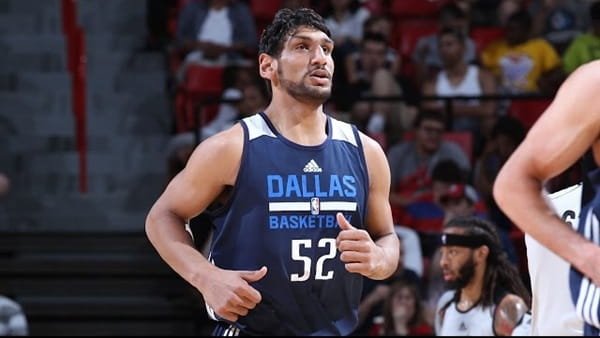
Satnam Singh changed the global visibility of Indian basketball in one night. The 7-foot-2 center became the first India-born player selected in an NBA Draft when the Dallas Mavericks took him with the 52nd pick in 2015. His strengths were size, rim protection, rebounding and interior finishing, and he later played for the Texas Legends in the NBA G League.
Satnam never appeared in an NBA regular-season game, but the milestone remains historic. He later moved into professional wrestling and is active with All Elite Wrestling and Ring of Honor in 2026. His lasting basketball impact is the door he opened for Indian prospects.
2. Vishesh Bhriguvanshi
Vishesh Bhriguvanshi has been one of the smartest and most durable guards in modern Indian basketball. At around 6-foot-4, he has played as a lead guard and wing creator, using court vision, controlled pace and timely perimeter scoring.
At the 2015 Asian Championship, he averaged 14.2 points and 4.8 assists per game. A long-time India captain and ONGC stalwart, he received the Arjuna Award in 2020. By 2026, his career has stretched across nearly two decades, making him a reference point for leadership, pick-and-roll decision-making and composure under pressure.
3. Geethu Anna Jose
Geethu Anna Jose is one of the most accomplished players in Indian women’s basketball history. The 6-foot-2 forward-center combined paint scoring, rebounding and a reliable mid-range touch. She led the scoring charts at consecutive FIBA Asia women’s championships and averaged 22 points per game in 2009.
In 2011, Jose became the first Indian player invited to WNBA tryouts, receiving opportunities from the Chicago Sky, Los Angeles Sparks and San Antonio Silver Stars. She also played professionally in Australia and won the Arjuna Award in 2014. Her career proved that an Indian woman could attract serious attention from established overseas basketball systems.
4. Amjyot Singh Gill
Amjyot Singh Gill is one of India’s most internationally travelled modern forwards. FIBA lists him at 6-foot-9, and his game combines power-forward strength with ball-handling, transition play and outside shooting. At the 2015 FIBA Asia Championship, he averaged 20.9 points and 8.3 rebounds per game.
Amjyot played professionally in Japan and later made the Oklahoma City Blue roster in the NBA G League, appearing in 30 games. He also returned to India’s FIBA setup in later qualification cycles. His career showed that an Indian forward could compete in faster, more physical professional systems abroad.
5. Amritpal Singh
Amritpal Singh has been one of India’s strongest true centers of the modern era. Listed by FIBA at 6-foot-10, he built his game around post positioning, screening, rebounding, rim protection and efficient finishing near the basket. His 2016 FIBA Asia Challenge was outstanding: 17.8 points and 10.4 rebounds per game.
In 2017, Amritpal signed with the Sydney Kings and became the first India-born player to compete in Australia’s National Basketball League. He has remained part of India’s senior-team picture across multiple FIBA cycles. His career stands out because genuine top-level overseas opportunities for Indian centers have historically been rare.
6. Prashanti Singh
Prashanti Singh is a defining figure of Indian women’s basketball and a prominent member of Varanasi’s famous Singh Sisters sporting family. A shooting guard/small forward, she was known for perimeter scoring, movement without the ball and a confident mid-range game.
She represented India for many years and became one of the country’s most decorated basketball players. Prashanti received the Arjuna Award in 2017 and the Padma Shri in 2019, becoming the first Indian basketball player to receive the civilian honour. Her visibility helped push women’s basketball into a wider national conversation and inspired younger players.
7. Raspreet Sidhu
Raspreet Sidhu is an important bridge between India’s traditional 5×5 women’s game and the faster 3×3 circuit. A 5-foot-7 guard, she represented India in multiple FIBA Asia tournaments and later captained the national team in both 5×5 and 3×3 formats.
Her 3×3 impact became especially visible with the Delhi Divas. In 2022, the team won the 3BL Women’s League and Sidhu was named MVP; the group also qualified for the Red Bull Half Court World Final. Her strengths include ball rotation, long-range shooting and aggressive decision-making in space.
8. Princepal Singh
Princepal Singh represents the NBA Academy generation of Indian basketball. The 6-foot-9 center/forward became the first NBA Academy graduate to sign with the NBA G League when he joined Ignite in 2020. In 2021, he was part of the Sacramento Kings squad that won the NBA Summer League championship.
His game is built around length, mobility, rebounding and finishing around the rim. In 2026, Princepal remains active for India and Indian Railways, including FIBA World Cup qualifying and West Asia Super League competition. His career remains one of the country’s most important development stories and a model for young prospects entering structured academy pathways.
9. Anitha Pauldurai
Anitha Pauldurai was the floor general of Indian women’s basketball for much of the 2000s and 2010s. A guard with strong court vision, leadership and transition control, she represented India for roughly 18 years and captained the senior national side for eight years.
Her career included Asian Championships, the Commonwealth Games and other major international events, while she also became a leading figure with Southern Railway. In 2021, Anitha received the Padma Shri. Her longevity, tactical awareness and leadership made her one of the central figures in the growth of women’s basketball in South India and nationally.
10. Ajmer Singh
Ajmer Singh is a foundational name from the era when India competed on the Olympic basketball stage. The 6-foot-5 frontcourt scorer was part of the Indian men’s team at the 1980 Moscow Olympics, the country’s only Olympic appearance in basketball.
Ajmer scored 149 points in seven games, averaging 21.3 points and 5.4 rebounds. That made him India’s leading scorer in the tournament and one of its standout performers. He received the Arjuna Award in 1982. His physical scoring style and relentless attack remain a benchmark when discussing India’s strongest historical international performances.
Conclusion
These ten players represent the full arc of Indian basketball. Ajmer Singh reflects the Olympic generation; Geethu Anna Jose, Prashanti Singh and Anitha Pauldurai built the women’s game; Vishesh Bhriguvanshi, Amjyot Singh and Amritpal Singh carried India through the modern FIBA era; and Satnam Singh and Princepal Singh pushed Indian basketball into NBA-linked territory. Raspreet Sidhu represents the rise of 3×3.
Beyond 2026, progress will depend on stronger professional leagues, youth coaching, sports science and regular high-level competition. India has produced the talent before. The next challenge is building a system that allows more of it to reach the world stage.