For centuries, India’s dargahs have been more than tombs of revered saints. They have served as spaces of ziyarat, prayer, music, charity and social meeting, where pilgrims often crossed boundaries of language, region and faith. In north India especially, this shared devotional culture became closely associated with Ganga-Jamuni Tehzeeb—a tradition of cultural coexistence shaped by Sufi khanqahs, poetry, qawwali and community hospitality.
Architecturally, these shrines are equally varied. Some stand inside Mughal imperial cities; others rise beside lakes, on sea islets or in coastal Tamil towns. Marble domes, carved jaalis, minarets, silver doors and Kashmiri woodwork give each site a distinct identity. The following ten shrines represent some of India’s most historically significant and culturally resonant Sufi pilgrimage places in 2026.
1. Ajmer Sharif Dargah, Ajmer, Rajasthan
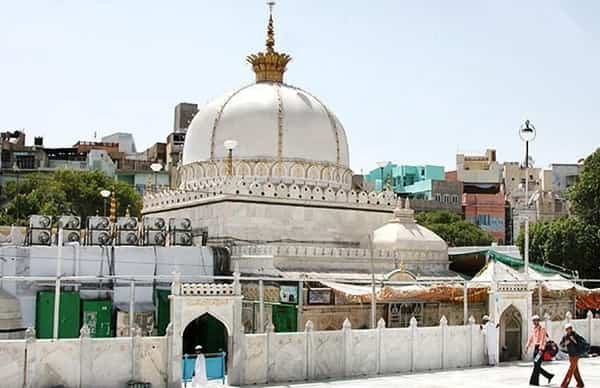
The dargah of Khwaja Moinuddin Chishti, revered as Gharib Nawaz, is the spiritual heart of the Chishti tradition in South Asia. The saint settled in Ajmer in the late 12th century and died in 1236. The shrine grew through centuries of royal patronage; Emperor Akbar famously made pilgrimages here, while Shah Jahan added important buildings to the complex. Marble, silver doors and ceremonial gateways frame the tomb. During the annual Urs, qawwali, chadar offerings and food prepared in giant degs create one of India’s most powerful traditions of shared pilgrimage.
2. Haji Ali Dargah, Mumbai, Maharashtra
Few dargahs possess a setting as dramatic as Haji Ali. The shrine of Pir Haji Ali Shah Bukhari stands on a rocky islet in the Arabian Sea, roughly 500 yards from Mumbai’s shoreline. Traditionally associated with the 15th century, the complex seen today reflects later rebuilding and restoration. White domes, minarets and Indo-Islamic detailing contrast strikingly with the sea. A narrow causeway links the shrine to the city and makes the approach part of the pilgrimage experience. The complex also includes a qawwal khana and mosque, while the saint’s Urs remains an important annual observance.
3. Hazrat Nizamuddin Dargah, New Delhi
The shrine of Hazrat Nizamuddin Auliya, one of the greatest saints of the Chishti Order, has shaped Delhi’s spiritual life since the 14th century. Its marble arches, lattice screens and intimate courtyards surround not only the saint’s tomb but also the grave of his celebrated disciple Amir Khusrau. The dargah is internationally known for qawwali, especially on Thursday evenings, when poetry and sama create an atmosphere unlike any conventional monument. Devotees offer rose petals, chadars and prayers, and many tie threads on the jaalis as a symbolic expression of hope and supplication.
4. Hazratbal Shrine, Srinagar, Jammu & Kashmir
Hazratbal is not a dargah in the strict sense of a saint’s tomb; it is a major Islamic relic shrine and is often grouped with India’s great pilgrimage sanctuaries. Set beside Dal Lake, the white-marble complex houses the Moi-e-Muqaddas, a relic believed to be a hair of Prophet Muhammad. The site’s sacred history goes back to the 17th century, while the present marble building was constructed in the 20th century. On special religious occasions the relic is displayed for ziyarat, drawing immense gatherings. Its serene lakeside setting and luminous dome make Hazratbal one of Kashmir’s defining spiritual landmarks.
5. Piran Kaliyar Sharif, Roorkee, Uttarakhand
Near Roorkee lies the dargah of Hazrat Alauddin Ali Ahmed Sabir Kaliyari, the 13th-century mystic associated with the Chishti tradition and the Sabiri branch. Known widely as Sabir Pak, he became one of northern India’s most revered Sufi figures. The shrine is especially noted for its annual Urs, when large numbers of pilgrims from different communities gather for prayer, qawwali and devotional observances. Uttarakhand Tourism describes Piran Kaliyar as a living symbol of national integration and harmony. Its importance rests less on imperial scale than on the intense devotional culture that has grown around the saint’s memory.
6. Dargah of Sheikh Salim Chishti, Fatehpur Sikri, Uttar Pradesh
Inside the Jama Masjid courtyard at Fatehpur Sikri stands one of the finest small monuments of Mughal India: the marble tomb of Sheikh Salim Chishti. Emperor Akbar revered the Chishti saint and associated his blessings with the birth of Prince Salim, later Emperor Jahangir. UNESCO dates the tomb’s completion to around 1580–81, with later embellishment under Jahangir. Its white marble, deep eaves and extraordinarily delicate jaali screens provide a luminous contrast to Fatehpur Sikri’s red sandstone. Pilgrims still tie threads to the latticework while making a mannat, returning to untie them when wishes are fulfilled.
7. Nagore Dargah, Nagore, Tamil Nadu
Nagore Dargah is the resting place of the 16th-century Sufi saint Hazrat Syed Shahul Hameed Qadiri Wali, popularly remembered as Nagore Andavar. The shrine became a major centre of the Qadiri tradition and is one of southern India’s strongest examples of cross-community devotion. Its skyline is marked by five minarets, including the great Periya Minara associated with the Maratha ruler Pratap Singh of Thanjavur. The annual Kanduri or Kandoori festival brings flag hoisting, processions and sandal anointment. Muslim and non-Muslim patronage has shaped the complex for centuries, giving Nagore a distinctive Tamil coastal identity.
8. Dargah Qutub Sahib, Mehrauli, New Delhi
The dargah of Khwaja Qutbuddin Bakhtiyar Kaki takes visitors back to the formative age of the Chishti Order in Delhi. A disciple and spiritual successor of Khwaja Moinuddin Chishti, Kaki died in 1235 and became one of the capital’s earliest great Sufi saints. The Mehrauli shrine evolved into a layered complex of gateways, courtyards, marble screens and a decorated domed enclosure around the grave. Sultans, nobles and later Mughal rulers revered the site, while generations of ordinary devotees came for ziyarat. Qawwali, Urs observances and the surrounding sacred landscape keep the shrine’s medieval spiritual legacy alive.
9. Ervadi Dargah, Ramanathapuram, Tamil Nadu
Ervadi Dargah is dedicated to Sultan Syed Ibrahim Shaheed Badusha, remembered in local tradition as a saint who came from Arabia to the Tamil coast roughly eight centuries ago. The pilgrimage complex in Ramanathapuram district attracts visitors from Tamil Nadu as well as Sri Lanka, Malaysia and Singapore. Its most important celebration is the month-long Santhanakoodu festival, held in the Islamic month of Dhu al-Qi’dah and marked by large inter-community gatherings. Ervadi is also widely associated with prayers for spiritual healing and relief from distress. Its enduring reputation reflects the deep roots of Sufi devotion along India’s southern coast.
10. Charar-e-Sharief, Budgam, Jammu & Kashmir
Charar-e-Sharief enshrines Sheikh Noor-ud-Din Noorani, also known as Nund Rishi or Alamdar-e-Kashmir, the 14th–15th century mystic regarded as the founder of Kashmir’s Rishi tradition. His teachings emphasized simplicity, harmony and moral discipline, giving the shrine significance far beyond a single community. The centuries-old complex was destroyed in the 1995 fire and later reconstructed, retaining features inspired by traditional Kashmiri architecture, including khatamband-style ceiling work and a pagoda-like profile. Annual Urs observances, poetry and ziyarat continue to make Charar-e-Sharief a powerful symbol of Kashmir’s spiritual and cultural memory.
Conclusion
India’s famous dargahs preserve a living heritage in which architecture, poetry, music, charity and faith meet. From Ajmer’s Chishti traditions and Mumbai’s sea-isle shrine to Nagore’s Tamil coastal culture and Kashmir’s Rishi heritage, each sanctuary expresses Sufism through a different regional language. Visitors should approach these places as active sacred spaces rather than ordinary monuments: wear modest clothing, cover the head where required, remove footwear in designated areas and avoid disrupting prayer or Urs rituals. Respectful conduct allows the history, devotion and plural cultural spirit of these shrines to be experienced on their own terms.