India’s museums hold the material memory of one of the world’s longest and most varied cultural histories. Inside their galleries, Harappan seals and bronze figurines sit beside Chola bronzes, Mughal miniature paintings, royal arms, colonial-era art, rare textiles and personal objects carried by families during Partition. The best institutions do more than preserve valuable objects. They establish provenance, conserve fragile material, interpret context and help visitors understand how art, faith, power, trade and everyday life changed across centuries.
By 2026, museum-going in India is also becoming more immersive. Digital repositories, virtual galleries, tactile interpretation and multimedia oral histories are bringing collections to wider audiences. From national encyclopaedic museums to specialist textile and memorial institutions, these ten places offer some of the richest encounters with India’s past. Let’s check out the top 10 famous museums in India.
1. National Museum, New Delhi
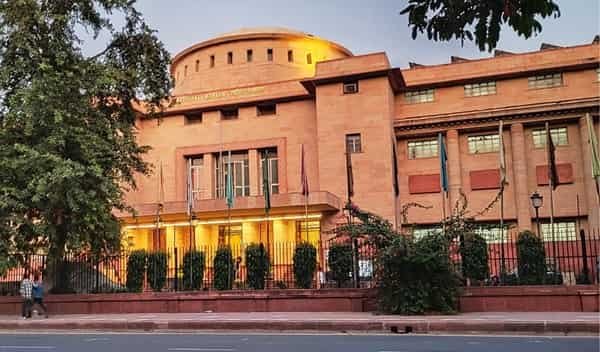
Inaugurated in 1949 and later moved into its purpose-built Janpath building, the National Museum is one of India’s most important encyclopaedic institutions. Its holdings number around 200,000 objects and span more than 5,000 years of cultural history.
The Harappan Gallery includes the celebrated bronze Dancing Girl of Mohenjo-daro, terracotta figures, pottery and seals. Other strengths include sculpture, manuscripts, arms and armour, miniature painting, jewellery, numismatics and the Buddhist Art Gallery with sacred Buddha relics from Kapilavastu. Its tactile Anubhav gallery also shows how accessibility is becoming part of modern museum interpretation.
2. Indian Museum, Kolkata, West Bengal
Founded in 1814 at the Asiatic Society, the Indian Museum is the oldest and largest multipurpose museum in the Indian subcontinent. Its present Chowringhee building, completed in the 19th century, gives the institution a grand classical setting.
The collection moves between archaeology and natural history. Visitors encounter Buddhist sculpture, Gandharan art, coins, fossils, textiles, zoological specimens and a celebrated Egyptian mummy that arrived in Calcutta in 1882. Its breadth makes it particularly valuable for students who want to see archaeology, art history, geology and anthropology under one roof.
3. Chhatrapati Shivaji Maharaj Vastu Sangrahalaya, Mumbai, Maharashtra
Mumbai’s CSMVS began as the Prince of Wales Museum of Western India. Its foundation stone was laid in 1905, the building was completed in 1914, and it opened in 1922. Designed by George Wittet, it is a major Indo-Saracenic landmark combining Indian, Islamic and Western elements.
Inside are roughly 70,000 objects. The museum is especially strong in Indian miniature paintings, sculpture, decorative arts, arms and armour, textiles, jewellery, numismatics, European paintings and Chinese and Japanese art. Its conservation work and international collaborations have also made CSMVS an important model for contemporary museum practice.
4. Salar Jung Museum, Hyderabad, Telangana
Opened in 1951, the Salar Jung Museum grew from the collecting traditions of Hyderabad’s influential Salar Jung family, especially Mir Yousuf Ali Khan, Salar Jung III. It preserves more than 46,000 art objects, thousands of manuscripts and a substantial rare-book collection.
Its star attraction is Giovanni Maria Benzoni’s 19th-century marble Veiled Rebecca, admired for the illusion of a transparent veil carved from stone. Equally memorable is the double figure of Mephistopheles and Margaretta, viewed differently from front and back. Arms, jade, clocks, porcelain and miniature paintings make the museum unusually cosmopolitan.
5. Government Museum, Chennai, Tamil Nadu
Established in 1851, the Government Museum at Egmore is the second-oldest museum in India and one of the country’s great repositories of South Indian archaeology. Its large campus developed over time, with the Indo-Saracenic National Art Gallery forming part of the wider complex.
Its greatest treasures are the Chola and other South Indian bronzes, where images of Shiva Nataraja demonstrate the brilliance of lost-wax casting. The museum also holds important Amaravati Buddhist sculptures, inscriptions, copper-plate grants, prehistoric material, Roman finds from Arikamedu and major numismatic collections. For the study of South Indian art, it is indispensable.
6. Calico Museum of Textiles, Ahmedabad, Gujarat
Founded in 1949 by Gautam Sarabhai with the support of his sister Gira Sarabhai, the Calico Museum of Textiles grew from Ahmedabad’s historic importance as a textile centre. Today it forms part of the Sarabhai Foundation at Shahibaug, within the landscaped estate known as The Retreat.
Its collections trace centuries of Indian textile excellence through court fabrics, religious hangings, embroidered cloth, regional weaves, printed and painted textiles and historic garments. For researchers, its importance lies in technique, dyeing, weaving, trade and textile conservation. Guided access gives the museum a more intimate curatorial character than most large public institutions.
7. Albert Hall Museum, Jaipur, Rajasthan
Set in Ram Niwas Garden, Albert Hall is Rajasthan’s oldest museum and one of Jaipur’s most spectacular Indo-Saracenic landmarks. Its foundation stone was laid in 1876, and architect Samuel Swinton Jacob developed the building as a blend of Rajput and Indo-Islamic forms.
The museum holds miniature paintings, arms and armour, jewellery, pottery, metalwork, sculpture, coins and textiles. Two objects attract particular attention: an Egyptian mummy and a rare Persian garden carpet. The building itself—with domes, arches, chhatris and richly decorated interiors—is as important to the visitor experience as the collection.
8. Victoria Memorial Hall, Kolkata, West Bengal
Conceived after Queen Victoria’s death in 1901, Victoria Memorial Hall was designed by Sir William Emerson and opened to the public in 1921. Built in white marble, its monumental composition combines classical planning with Indo-Islamic and Mughal-inspired details.
The museum preserves paintings, manuscripts, sculptures, maps, photographs and objects connected with colonial-era India. Highlights include works by European and Indian artists, historical portraits and a sword associated with Tipu Sultan. Its galleries are most useful when approached critically, as records of imperial representation as well as Indian social and artistic history.
9. National Gallery of Modern Art, New Delhi / Mumbai / Bengaluru
The National Gallery of Modern Art (NGMA) was inaugurated in New Delhi in 1954 and later expanded through regional centres in Mumbai and Bengaluru. Its Delhi home, Jaipur House near India Gate, combines a former princely residence with modern gallery extensions.
NGMA is India’s premier institution for modern and contemporary art. Its holdings trace artistic change through Raja Ravi Varma, Rabindranath Tagore, Nandalal Bose, Jamini Roy, Ramkinkar Baij and Amrita Sher-Gil. Its large Sher-Gil collection, virtual exhibitions and rotating retrospectives make it essential for understanding Indian modernism and the transition from academic painting to modern and contemporary practices.
10. Partition Museum, Amritsar, Punjab
Housed in Amritsar’s historic Town Hall, the Partition Museum is widely described as the world’s first museum devoted to the 1947 Partition. Developed as a “People’s Museum,” it places personal testimony at the centre of historical interpretation.
Its galleries contain trunks, clothes, utensils, letters, photographs, ration cards, artworks and other belongings donated by survivors and their families. Audio-visual stations preserve oral histories that give voice to displacement, loss and rebuilding. The museum’s power comes from provenance: ordinary objects become historical evidence because the stories of the people who carried them remain attached.
Conclusion
Together, these museums preserve the tangible record of India’s civilizations, artistic traditions and collective memory. Some protect archaeological masterpieces. Others conserve textiles, modern art, royal collections or personal histories that might otherwise disappear. Their work increasingly combines scholarship with digital curation, conservation science and accessible storytelling.
Visitors should check current opening days and gallery closures before travelling. Online ticketing, pre-booked guided tours and enough time for slower gallery viewing can transform a quick stop into a far richer encounter with India’s heritage.