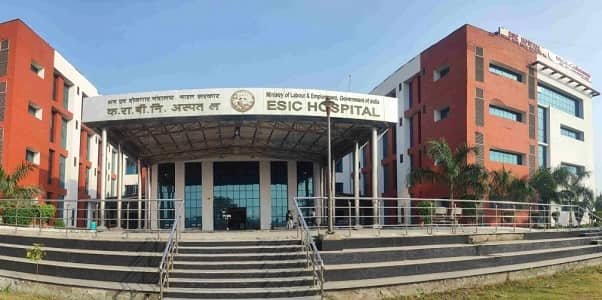
Employees’ State Insurance Corporation hospitals, commonly known as ESI Hospitals, are government hospitals. They are not private hospitals.
ESI Hospitals operate under the Employees’ State Insurance Corporation (ESIC), which is a government organization under the Ministry of Labour and Employment, Government of India.
These hospitals mainly provide medical care and healthcare benefits to workers and employees covered under the ESI scheme and their families.
Across India, ESI hospitals play a major role in employee healthcare and social security services.
How ESI Hospitals Started
The ESI healthcare system was created under the Employees’ State Insurance Act of 1948.
After independence, the Government of India introduced the ESI scheme to provide medical and financial protection for workers in organized sectors.
The system was designed to help employees receive:
- Medical treatment
- Sickness benefits
- Maternity support
- Disability benefits
- Healthcare facilities for families
To support this system, ESI hospitals and dispensaries were established in different states.
Over time, the ESI network expanded across India.
Why ESI Hospitals Are Considered Government Hospitals
ESI hospitals are operated by:
- Employees’ State Insurance Corporation (ESIC)
ESIC functions under the Ministry of Labour and Employment, Government of India.
Since these hospitals are funded, managed, and supervised through government systems, ESI hospitals are officially classified as government hospitals.
Their infrastructure, staffing systems, and administration are connected to public healthcare services.
What Does an ESI Hospital Do?
ESI hospitals mainly provide healthcare services for insured employees and their dependents.
Their services include:
- General medical treatment
- Emergency care
- Surgery
- Maternity care
- Diagnostic services
- Specialist consultations
- Employee healthcare support
- Occupational health-related services
Many hospitals also provide advanced treatment and referral services.
ESI Hospital Structure and Identity
Here is a simple overview of ESI hospitals:
| Feature | ESI Hospitals |
| Ownership | Government of India |
| Type | Government hospital system |
| Managed By | Employees’ State Insurance Corporation |
| Ministry | Ministry of Labour and Employment |
| Main Focus | Employee and worker healthcare |
| Healthcare Type | Public medical services |
| Patient Eligibility | ESI-insured workers and families |
| Employee Type | Government and public healthcare staff |
This structure makes ESI hospitals part of India’s public healthcare system.
Who Can Get Treatment in ESI Hospitals?
ESI hospitals mainly provide treatment to employees covered under the ESI scheme.
Eligible people usually include:
- Salaried employees under ESI coverage
- Factory workers
- Employees in certain establishments
- Dependents and family members of insured workers
Patients generally use ESI cards or insurance eligibility systems for treatment access.
Why ESI Hospitals Are Important in India
ESI hospitals are important because they provide affordable healthcare support for millions of workers.
The system helps:
- Reduce medical expenses for employees
- Improve worker healthcare access
- Support financially weaker working families
- Provide social security benefits
- Offer treatment through government-backed systems
For many workers, ESI hospitals are a major source of healthcare support.
Are ESI Hospital Doctors Government Doctors?
Yes, doctors and medical staff working in ESI hospitals are generally government or government-linked healthcare employees.
They may work under:
- ESIC administration
- Government medical systems
- Public healthcare recruitment structures
Because of this, ESI hospital jobs are generally considered government-sector healthcare jobs.
Is Treatment in ESI Hospitals Free?
Treatment in ESI hospitals is usually provided through the ESI insurance system.
Eligible insured workers and their families can receive medical services under ESI coverage.
However, access depends on:
- ESI registration eligibility
- Employee contribution records
- Insurance status
The system is designed to make healthcare affordable for workers.
Are ESI Hospitals Better Than Private Hospitals?
ESI hospitals and private hospitals work differently.
ESI hospitals focus more on:
- Public healthcare support
- Affordable treatment
- Worker welfare services
- Government-backed healthcare access
Private hospitals may sometimes offer:
- Faster appointments
- Luxury facilities
- Premium healthcare services
However, ESI hospitals remain extremely important for working-class healthcare support in India.
Do ESI Hospitals Have Medical Colleges?
Yes, ESIC also operates several medical colleges and teaching hospitals across India.
Examples include:
- Employees’ State Insurance Corporation Medical College institutions in different states
These institutions support medical education and healthcare training.
Why People Prefer ESI Hospitals
Many employees prefer ESI hospitals because of:
- Affordable healthcare
- Government-backed medical system
- Coverage for families
- Worker welfare support
- Access to specialists in many regions
For salaried workers covered under ESI, the system provides important medical security.
Challenges Faced by ESI Hospitals
Like many government healthcare systems, some ESI hospitals may face challenges such as:
- Large patient crowds
- Waiting times
- Infrastructure pressure
- Staff shortages in some areas
However, the government continues expanding and modernizing many ESIC healthcare facilities.
Difference Between ESI Hospitals and Private Hospitals
Here is a simple comparison:
| Area | ESI Hospitals | Private Hospitals |
| Ownership | Government | Private organizations |
| Main Purpose | Worker healthcare and welfare | Commercial healthcare services |
| Treatment Cost | Mostly covered under ESI scheme | Usually higher |
| Patient Access | ESI-insured employees and families | Open to general public |
| Staff Type | Government/public healthcare employees | Private hospital employees |
| Funding System | Government and ESI contributions | Private investment and hospital revenue |
This difference explains why ESI hospitals are treated as government healthcare institutions.
Does ESIC Only Work in Big Cities?
No, ESIC operates hospitals, dispensaries, and healthcare centers in multiple cities and industrial regions across India.
Its services are especially important in areas with large numbers of workers and industrial employees.
Conclusion
ESI Hospitals are government hospitals, not private hospitals. They operate under the Employees’ State Insurance Corporation, which functions under the Government of India.
With their focus on worker healthcare, affordable treatment, and social security support, ESI hospitals continue to play a major role in India’s public healthcare and employee welfare system.