Silk in India is far more than a luxury fabric. It is part of weddings, temple traditions, festive dressing and family heirlooms. From the brilliance of a Kanjeevaram saree to Assam’s naturally golden Muga and Gujarat’s intricate Patan Patola, every region gives silk a different identity.
India remains the world’s second-largest silk producer and is unusual in producing all four major commercial silk families—Mulberry, Tasar, Eri and Muga. Yet shopping is more confusing today. Pure handloom silk now sits beside powerloom fabric, silk blends and synthetic “art silk,” often with very similar shine.
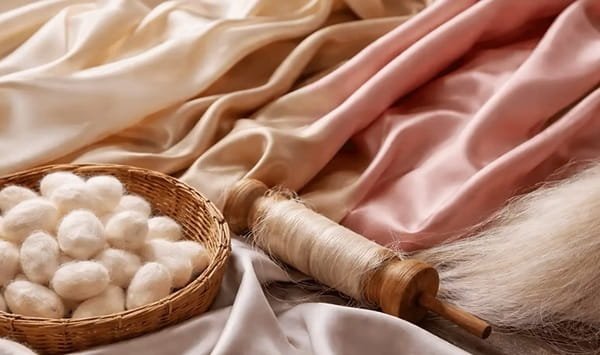
The right choice depends on use. A bride may prefer lustrous Mulberry, while a summer wedding guest may enjoy lighter Tussar or Chanderi. Ethical shoppers may explore Eri, while collectors often seek GI-protected regional weaves.
This guide explains fibre source, texture, drape, GI status, care and buying checks. Let’s check out the Top 10 Silk Varieties in India.
1. Mulberry Silk
Mulberry is India’s dominant commercial silk and the smoothest benchmark for Pure Mulberry vs Tussar silk. It comes mainly from the domesticated Bombyx mori silkworm and produces fine, even yarn with strong lustre. Kancheepuram Silk is GI registered in Tamil Nadu, while Banaras Brocades and Sarees have separate GI protection. Choose Mulberry for bridal sarees, rich colour and a formal drape.
2. Tussar Silk (Kosa Silk)
Tussar, or Tasar, belongs to India’s Vanya or wild-silk family and is strongly associated with Jharkhand, Chhattisgarh, Bihar, Odisha and West Bengal. Compared with Mulberry, it has more texture, slight irregularity and a natural beige-to-honey character. Its breathability makes it excellent for sarees, dupattas, kurtas, jackets and understated festive wear.
3. Muga Silk
Muga is Assam’s famous golden silk, produced from Antheraea assamensis. Its warm golden-yellow colour occurs naturally in the fibre, and Muga Silk of Assam is GI registered. It is prized for strength, longevity and lustre; government handloom material notes that its sheen can improve with careful hand washing. Muga is ideal for Mekhela Chadors, sarees and heirloom ceremonial wear.
4. Eri Silk (Ahimsa / Peace Silk)
Eri is closely associated with Assam and Northeast India. Its open-ended cocoon produces discontinuous fibre, so the silk is spun rather than reeled. This gives Eri a soft, warm and matte feel. It is often called Ahimsa or peace silk because the moth can be allowed to emerge before processing. It is still animal-derived, however, so “vegan silk” is not technically accurate.
5. Chanderi Silk
Chanderi is a weaving tradition rather than one single raw silk. Produced around Chanderi in Madhya Pradesh, Chanderi Sarees are GI registered. Many classic versions combine silk warp with cotton weft. The fabric is known for a light, sheer drape and delicate zari or butis, making it especially attractive for summer weddings, pujas and festive office wear.
6. Baluchari Silk
Baluchari sarees from West Bengal are celebrated for storytelling through weave. Borders and pallus may show scenes inspired by epics, court life, flowers and traditional ornament, and Baluchari Saree is GI registered. The fabric offers ceremonial richness without always feeling as heavy as dense zari brocade. It is a fine choice for weddings, cultural functions and collectors.
7. Paithani Silk
Paithani is one of Maharashtra’s great silk traditions, and Paithani Saree & Fabrics is GI registered. Rich colours, contrasting borders and tapestry-like pallus featuring peacocks, lotuses and geometric motifs define the look. Authentic handwoven Paithani requires substantial skill because the decorative sections are built into the weave. It is especially valued for weddings, festivals and heirloom gifting.
8. Bhagalpuri Silk
Bhagalpur in Bihar is closely linked with Tussar weaving, and Bhagalpur Silk Fabrics & Sarees is GI registered. Its slightly slubby texture and restrained shine give it a more natural appearance than highly polished Mulberry. It works beautifully for sarees, dupattas, Nehru jackets and fusion garments. “Queen of Silks” is a popular marketing phrase, not an official quality grade.
9. Mysore Silk
Mysore Silk is a GI-registered Karnataka textile associated with high-quality Mulberry silk. It is known for a smooth surface, fluid drape and rich colour. Authentic KSIC Mysore Silk uses pure natural silk and is known for gold zari, with identification codes and holograms. It suits elegant wedding and festive wear. Silk Mark confirms silk purity, not zari purity.
10. Patola Silk (Patan Double Ikat)
Patan Patola is one of India’s most demanding silk techniques. In genuine double ikat, both warp and weft yarns are resist-tied and dyed before weaving, then precisely aligned on the loom. Patan Patola is GI registered in Gujarat, and genuine pieces may take months to produce. They are prized for crisp patterning, colour depth and heirloom value.
How to Spot Pure Silk and Care for It at Home
For shoppers asking how to test pure silk at home, begin with the official Silk Mark. Authorised labels are used on pure silk products and carry security features such as a hologram and unique number.
A loose-thread burn test can help: silk burns slowly, smells like burnt hair and leaves a brittle dark residue, while polyester melts into a hard plastic bead. Never cut or burn an expensive finished saree simply to test it.
For valuable handloom and zari pieces, follow the maker’s care label; professional dry cleaning is often the safer choice. Store silk clean and completely dry in breathable muslin or cotton. Keep it away from direct sunlight, dampness and direct contact with mothballs. Refold heirloom sarees periodically so the same crease does not remain under pressure for years.
Conclusion
The best Indian silks range from smooth Mulberry and earthy Tussar to Assam’s golden Muga and warm Eri. Chanderi, Baluchari, Paithani, Bhagalpuri, Mysore Silk and Patan Patola show how regional weaving traditions can give silk dramatically different texture, weight and character.
Buying authentic handloom and genuine GI tagged silks India supports skilled weaving communities while giving buyers textiles with lasting cultural and wardrobe value.
Frequently Asked Questions
Q. What is the difference between Mulberry silk and Wild Tussar/Muga silk?
Mulberry is generally finer, smoother and more uniform. Tussar and Muga are Vanya silks with more natural texture, while Muga also has its distinctive golden colour.
Q. What is Ahimsa Silk and how is it produced ethically?
Ahimsa silk refers to production intended to avoid killing the moth inside the cocoon. Eri is commonly associated with this method because the moth can emerge before the cocoon is processed. Ask the seller about the actual production method.
Q. How do I check if my silk saree has genuine gold Zari work?
Ask for the exact zari composition and a written invoice from a reputable producer. Silk Mark does not certify zari purity. For an expensive purchase, manufacturer authentication or professional metal testing is more reliable than home scratching or acid tests.