Few fruits bring colour to an Indian table as effortlessly as pomegranate. A handful of ruby-red arils can brighten fruit chaat, dahi, salads, desserts and festive platters, while the juice is prized for its sweet-tart freshness. Dried anardana adds acidity to chutneys, curries and spice blends. Known as anar in Hindi, dalim in Bengali, dalimba in Marathi, mathulai in Tamil and danimma in Telugu, pomegranate (Punica granatum) is both a household fruit and a high-value orchard crop.
By 2026, India’s pomegranate sector is increasingly driven by export colour, soft seeds, bold arils, shelf life and disease-free planting material. Maharashtra remains the commercial heartland, while Karnataka, Gujarat, Rajasthan, Andhra Pradesh and Madhya Pradesh are major belts. Research is also focusing on cold-chain handling, processing and region-specific varieties. For consumers, that means more choice between premium table fruit, early cultivars and processing types. So, let’s check out the top 10 pomegranate varieties in India!
1. Bhagwa
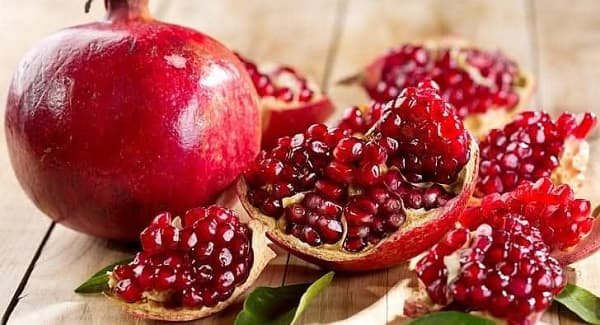
Bhagwa is the dominant modern Indian pomegranate and the variety most closely associated with export-quality fruit. Its glossy rind, bold arils and transport strength make it a commercial benchmark.
- Regional belts & names: Maharashtra, Karnataka, Gujarat, Rajasthan and Madhya Pradesh; anar, dalimba and danimma are common regional names.
- Fruit profile & flavor: Large fruits, often around 400 g, with saffron-red skin, blood-red bold arils, soft seeds and high sweetness.
- Best culinary uses: Fresh eating, premium aril packs, juice, fruit chaat, raita and dessert garnishing.
- Harvest & market value: Late type, generally maturing in about 180-190 days; thick peel suits long-distance and export markets.
2. Ganesh
Ganesh is one of India’s classic cultivars and an important parent in later pomegranate breeding. It remains valued for large fruit, soft seeds and broad adaptability.
- Regional belts & names: Strong Maharashtra association, with cultivation in Andhra Pradesh, Gujarat, Tamil Nadu, Uttar Pradesh and hill states.
- Fruit profile & flavor: Smooth round fruit with yellow-red skin, light-pink juicy arils, soft seeds and mild sweetness.
- Best culinary uses: Fresh eating, juice, salads and family fruit platters.
- Harvest & market value: Earlier than Bhagwa; drought adaptability and wide seasonal bearing support cultivation in dry regions.
3. Mridula
Mridula was developed by MPKV, Rahuri, from Ganesh and Gulsha Rose Pink. Its dark aril colour and soft seeds give it excellent table appeal.
- Regional belts & names: Maharashtra, Tamil Nadu, Rajasthan and other semi-arid belts.
- Fruit profile & flavor: Red-skinned fruits around 230-300 g with blood-red arils, soft seeds and about 17-18°Brix TSS.
- Best culinary uses: Premium table fruit, juice, packaged arils, desserts and colourful fruit salads.
- Harvest & market value: An early variety useful where growers want a shorter crop duration than Bhagwa.
4. Arakta / Phule Arakta
Arakta helped shape India’s modern red pomegranate market and is part of the breeding background behind Bhagwa. Strong rind and aril colour are its main attractions.
- Regional belts & names: Developed and popularised in Maharashtra, with suitability in other pomegranate-growing states.
- Fruit profile & flavor: Dark-red fruit and dark-red arils with soft seeds and high soluble solids.
- Best culinary uses: Fresh fruit, juice, packaged arils and dessert toppings.
- Harvest & market value: Early-maturing, often about a month ahead of Bhagwa, helping growers target an earlier market window.
5. Phule Bhagwa Super
Phule Bhagwa Super is an MPKV selection from Bhagwa designed to retain premium colour while reaching harvest slightly earlier.
- Regional belts & names: Maharashtra and other dry commercial pomegranate regions.
- Fruit profile & flavor: Medium fruits around 270-300 g, glossy dark-saffron rind, dark-red arils, soft seeds and high juice recovery.
- Best culinary uses: Fresh eating, aril packs, juice, hotel fruit platters and export-oriented retail.
- Harvest & market value: Matures at about 177 days, generally two to three weeks before standard Bhagwa.
6. Ruby
Ruby is an ICAR-IIHR complex hybrid involving Ganesh, Kabul, Yercaud and Gulsha Rose Pink. It combines attractive rind colour with bold red arils and soft seeds.
- Regional belts & names: Karnataka and Maharashtra, with relevance to other southern and western belts.
- Fruit profile & flavor: Usually 225-275 g, reddish rind, bold red arils, soft seeds and sweetness around 17°Brix.
- Best culinary uses: Table fruit, fresh juice, fruit bowls and packaged arils.
- Harvest & market value: Good visual appeal suits organised retail; reported yields are about 16-18 t/ha under suitable management.
7. Solapur Lal
Solapur Lal represents the processing and nutrition-focused side of modern Indian breeding. ICAR-NRCP released it as India’s first biofortified pomegranate variety.
- Regional belts & names: Developed at Solapur and adapted to semi-arid pomegranate regions.
- Fruit profile & flavor: Deep-coloured arils with about 17.6°Brix TSS and high anthocyanin content.
- Best culinary uses: Juice, concentrate, ready-to-serve beverages, processed arils and value-added products.
- Harvest & market value: Mid-season and earlier than Bhagwa; ICAR reports about 23-27 t/ha plus enhanced iron, zinc and Vitamin C.
8. G-137
G-137 is a clonal selection from Ganesh developed by MPKV. It improves on its parent in fruit size, aril size and sweetness while retaining soft seeds.
- Regional belts & names: Maharashtra, Andhra Pradesh and Karnataka.
- Fruit profile & flavor: Large fruits around 330 g, smooth yellow-red skin, large light-pink arils, sweet taste and soft seeds.
- Best culinary uses: Fresh eating, juice, salads and table markets where large arils are attractive.
- Harvest & market value: A prolific bearer with good drought adaptation, useful in dry commercial regions.
9. Jyoti
Jyoti is a soft-seeded cultivar associated with Bengaluru’s horticultural breeding programme and remains a useful table variety in southern India.
- Regional belts & names: Karnataka, Tamil Nadu and Madhya Pradesh.
- Fruit profile & flavor: Large attractive fruit with red rind, blood-red juicy arils and very soft seeds.
- Best culinary uses: Fresh eating, juice, raita, fruit chaat and desserts.
- Harvest & market value: Fruits often develop inside the canopy, reducing sun-scorch damage; high pulp and juice content support fresh markets.
10. Jalore Seedless
Jalore Seedless is a Rajasthan selection suited to consumers who prefer softer seeds and easy-eating pomegranate fruit.
- Regional belts & names: Rajasthan, especially the Jalore belt, with interest in other arid regions.
- Fruit profile & flavor: Reddish-yellow to pinkish-yellow rind, light-pink arils and soft seeds.
- Best culinary uses: Fresh eating, children’s fruit portions, juice and local table markets.
- Harvest & market value: Well suited to dry conditions; its regional identity and soft-seeded character remain its biggest strengths.
Practical Buyer’s Guide: How to Pick & Store Fresh Pomegranates
- Judge weight, not only colour: A good pomegranate should feel heavy for its size, suggesting well-filled, juicy arils.
- Inspect the rind: Choose firm fruit with taut skin. Avoid major cracks, wet patches, mould or deep bruising.
- Check shape and maturity: Mature fruits often become slightly angular rather than perfectly round as the arils fill out.
- Store correctly: Keep fruit in a cool room for short use or refrigerate longer. Refrigerate opened arils in a sealed container.
Conclusion
India’s pomegranate diversity ranges from export-dominant Bhagwa to Mridula’s dark arils, Jalore Seedless’s easy eating and Solapur Lal’s processing value. Choosing the right cultivar for table use, juice or market distance gives better flavour, colour, shelf life and value.
Frequently Asked Questions
Q. Which pomegranate variety is best for export from India?
Bhagwa is the leading export-oriented choice because it combines attractive red skin, bold dark arils, soft seeds, thick rind and good transport life.
Q. Which Indian pomegranate varieties have soft seeds?
Bhagwa, Ganesh, Mridula, Arakta, Ruby, Jyoti and Jalore Seedless are known for relatively soft seeds and easy table eating.
Q. What is the difference between Bhagwa and Phule Bhagwa Super?
Both have premium colour and soft seeds, but Phule Bhagwa Super generally matures two to three weeks earlier. Standard Bhagwa usually produces larger fruit and remains the dominant export cultivar.
Q. How can you tell if a pomegranate is ripe before buying it?
Choose a heavy, firm fruit with mature colour and slightly angular sides. Avoid fruit that feels unusually light, soft or badly cracked.