A gurudwara is more than a place of worship. It expresses central Sikh values: devotion to the Guru Granth Sahib, equality before the Divine, sewa or selfless service, and langar, where everyone sits together in pangat and eats the same meal without distinction of caste, wealth, gender or faith. From the time of Guru Nanak Dev Ji, Sikh congregational life developed around sangat, kirtan and shared service. Historic gurudwaras later arose at places connected with the Gurus, martyrdoms and major turning points in Sikh history, while the Five Takhts became seats of Sikh temporal and institutional authority.
Across India, these shrines range from Amritsar’s gold-clad sanctum to Himalayan pilgrimage routes, Mughal-era Delhi sites and riverbank Takhts. This list profiles ten of the most historically significant, spiritually revered and architecturally distinctive gurudwaras in India.
1. Sri Harmandir Sahib / Golden Temple, Amritsar, Punjab
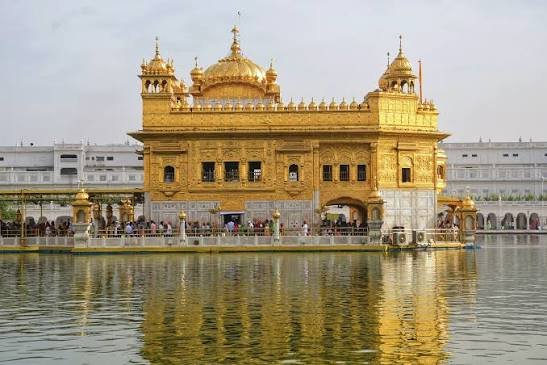
Sri Harmandir Sahib, also known as Sri Darbar Sahib, is the pre-eminent spiritual shrine of Sikhism. Guru Arjan Dev Ji conceived the central place of worship, while the Amrit Sarovar had developed under earlier Gurus. The shrine’s four entrances symbolise openness to all humanity.
Its gold-clad upper structure, marble parikrama and shimmering sarovar create one of India’s most recognisable sacred spaces. Gurbani kirtan continues from early morning until the closing ritual, while Guru Ram Das Langar serves visitors in pangat without discrimination.
2. Takht Sri Harmandir Ji Patna Sahib, Patna, Bihar
Takht Sri Patna Sahib marks the birthplace of Guru Gobind Singh Ji, born in Patna in 1666. One of the Five Takhts, it is also associated with visits by Guru Nanak Dev Ji and Guru Tegh Bahadur Ji. Maharaja Ranjit Singh initiated a major shrine here, and the present building was reconstructed after the 1934 Bihar earthquake.
Its white marble, domes and gilded details give the complex a stately appearance. The Takht preserves memories of Guru Gobind Singh Ji’s childhood, while nearby exhibitions present Sikh history and objects associated with his life.
3. Takht Sachkhand Sri Hazur Sahib, Nanded, Maharashtra
Takht Sri Hazur Sahib stands near the Godavari in Nanded, where Guru Gobind Singh Ji spent his final days in 1708. Before his passing, he conferred eternal Guruship upon the Guru Granth Sahib, ending the line of personal human Gurus.
Built under Maharaja Ranjit Singh between 1832 and 1837, the shrine is richly decorated with gold plates, marble inlay and floral work. Historic weapons and relics, including swords, bows, arrows and a matchlock, are displayed within the complex, giving Hazur Sahib a distinctive martial as well as devotional character.
4. Gurudwara Bangla Sahib, New Delhi
Gurudwara Bangla Sahib marks the Delhi stay of Guru Har Krishan Ji, the eighth Sikh Guru, in 1664. The site was originally Raja Jai Singh’s bungalow. Sikh tradition remembers the young Guru’s service to people suffering during an epidemic, and the sarovar remains associated with that memory of compassion.
The white marble complex, golden dome, Nishan Sahib and large sarovar form one of central Delhi’s most peaceful landmarks. Kirtan, prayer and sewa continue throughout the day, while the langar welcomes people of every background. Charitable medical services are also linked to the complex.
5. Gurudwara Sri Hemkund Sahib, Chamoli, Uttarakhand
Hemkund Sahib is one of India’s most dramatic Sikh pilgrimage destinations. The gurudwara stands beside a glacial lake at about 4,329 metres, or roughly 14,200 feet, amid seven Himalayan peaks. Sikh tradition associates the site with the tapasthan described by Guru Gobind Singh Ji in Bachittar Natak.
Its low, polygonal design suits severe mountain weather. Pilgrims trek from Govindghat via Ghangaria, and the shrine closes during the snowbound winter. The silent lake, cold air and surrounding peaks give Hemkund an austere, contemplative character unlike any urban gurudwara.
6. Gurudwara Sis Ganj Sahib, Chandni Chowk, Delhi
Gurudwara Sis Ganj Sahib commemorates the martyrdom of Guru Tegh Bahadur Ji, the ninth Sikh Guru, in Delhi in 1675. Sikh memory honours his sacrifice as a defence of freedom of conscience and religious belief.
Standing in busy Chandni Chowk, the shrine offers a striking contrast between Old Delhi’s movement and the calm of kirtan and prayer. Delhi Tourism notes that a banyan tree associated with the martyrdom site and a wall connected with the Guru’s imprisonment are preserved within the precincts. Langar and sewa remain central to the visitor experience.
7. Takht Sri Keshgarh Sahib, Anandpur Sahib, Punjab
Takht Sri Keshgarh Sahib stands at the historic heart of Anandpur Sahib and is one of the Five Takhts. It marks the site where Guru Gobind Singh Ji created the Khalsa Panth on Baisakhi in 1699 and initiated the Panj Pyare.
Built on a hillock, the shrine opens onto a broad marble courtyard and preserves weapons associated with Guru Gobind Singh Ji. Baisakhi and Hola Mohalla bring large gatherings for sangat, kirtan, martial displays, processions and langar, linking spiritual discipline with the Khalsa tradition of courage and service.
8. Gurudwara Paonta Sahib, Sirmaur, Himachal Pradesh
Gurudwara Paonta Sahib stands beside the Yamuna and is closely associated with Guru Gobind Singh Ji, who lived in the region for several years during the 1680s. The period became important for literary activity, military preparation and the growth of his court.
The riverside shrine is crowned by a large dome and includes spaces linked with the Guru’s stay. Himachal Tourism records that its museum preserves weapons and pens associated with him, while nearby Kavi Darbar recalls the literary culture of his court. Langar and major festivals keep Paonta Sahib a living pilgrimage centre.
9. Gurudwara Manikaran Sahib, Kullu, Himachal Pradesh
Set in the narrow Parvati Valley, Gurudwara Manikaran Sahib combines Sikh pilgrimage with a dramatic Himalayan landscape. Sikh tradition holds that Guru Nanak Dev Ji visited Manikaran during his travels, and the shrine commemorates that association.
The gurudwara stands beside the Parvati River, framed by steep mountain walls. Manikaran is especially famous for its natural hot springs, which form part of the pilgrimage experience and attract visitors of different faiths. The contrast between cold mountain air, steaming springs, kirtan and langar gives the shrine a memorable spiritual atmosphere.
10. Gurudwara Sri Fatehgarh Sahib, Punjab
Gurudwara Fatehgarh Sahib commemorates the martyrdom of Guru Gobind Singh Ji’s younger sons, Sahibzada Zorawar Singh Ji and Sahibzada Fateh Singh Ji, at Sirhind in 1704. The district itself takes its name from the younger Sahibzada.
The white-domed complex preserves the historical memory of the site, including Bhora Sahib, where a section associated with the martyrdom is preserved. Nearby shrines also remember Mata Gujri Ji. Every December, the Shaheedi Jor Mela draws large congregations for kirtan, remembrance, sewa and langar.
Conclusion
These ten gurudwaras bring together the central themes of Sikh heritage: devotion, equality, courage, sacrifice and service. Harmandir Sahib expresses universal welcome; Patna, Keshgarh and Hazur Sahib connect the life of Guru Gobind Singh Ji across three regions; Sis Ganj and Fatehgarh preserve memories of martyrdom; Hemkund, Paonta and Manikaran add powerful mountain landscapes to the pilgrimage tradition.
Visitors of every faith are welcome, but respect is essential. Cover the head, remove footwear, dress modestly, maintain decorum during prayer and sit humbly with the sangat. If you join the langar, receive the meal with gratitude and experience the Sikh ideal of equality in its simplest form.